Scientists map cucumber genes for disease resistance, stress tolerance, and fruit quality
Reddy BS, Singh S, Jaiswal S, Dey SS, Iquebal MA
Crop Improvement
Cucumbers you grow this summer struggle in heat waves and damp spells partly because breeders have lacked precise genetic targets to fix those weaknesses, and this study hands them a roadmap.
For decades, plant scientists have been finding chunks of cucumber DNA linked to useful traits like disease resistance or firm fruit, but the map coordinates were fuzzy and hard to use in practice. This study pooled results from 40 separate experiments and sharpened those coordinates dramatically, narrowing the search zones by more than five times. The team then checked which actual genes sit in those zones and confirmed they switch on and off in ways that match the traits, giving breeders specific targets to breed tougher, better-tasting cucumbers.
Key Findings
38 high-confidence genomic regions were identified from 647 original QTLs across 40 studies, with confidence intervals narrowed by 5.3-fold compared to individual study estimates.
Key stress-tolerance genes were pinpointed: NCED5 for cold tolerance, ClpB1 for heat, and MYB44-like for waterlogging, all on chromosomes 1, 3, 5, and 6.
16 of the 38 regions were independently validated against 7 genome-wide association studies, with one region (mQTL 6.8) explaining up to 49.81% of trait variation.
chevron_right Technical Summary
Researchers combined data from 40 separate cucumber genetics studies to pinpoint 38 high-confidence genomic regions controlling fruit quality, disease resistance, and stress tolerance. This gives breeders precise DNA markers to develop cucumbers that grow better under heat, cold, and waterlogging while also improving taste and appearance.
Abstract Preview
Original paper
Integrated Meta-QTL analysis and transcriptomic profiling reveal genomic regions for fruit quality, abiotic and biotic stress resilience in cucumber (Cucumis sativus L.).
Cucumber is a globally significant vegetable crop whose production and market value are affected by fruit quality and resilience to diverse environmental stressors. Despite the identification of nu...
open_in_new Read full abstractAbstract copyright held by the original publisher.
Species Mentioned
Was this useful?
Want to tell us more? (optional)
Thanks for the note!
Something went wrong — please try again.
Too many submissions. Try again in an hour.
Targeted knockout of a host peroxisomal peptidase confers field resistance to...
The corn in your grocery store and the staple food keeping millions of East African families fed is under serious threat from a viral disease that can wipe o...
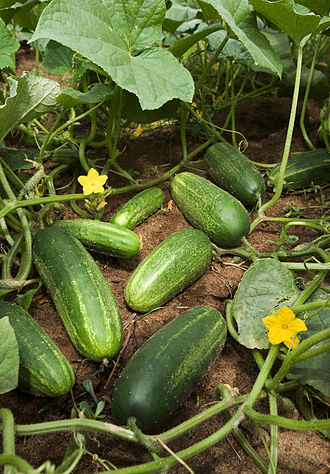
The cucumber is a widely-cultivated creeping vine plant in the family Cucurbitaceae that bears cylindrical to spherical fruits, used as culinary vegetables. Considered an annual plant, there are three main types of cucumber—slicing, pickling, and seedless.