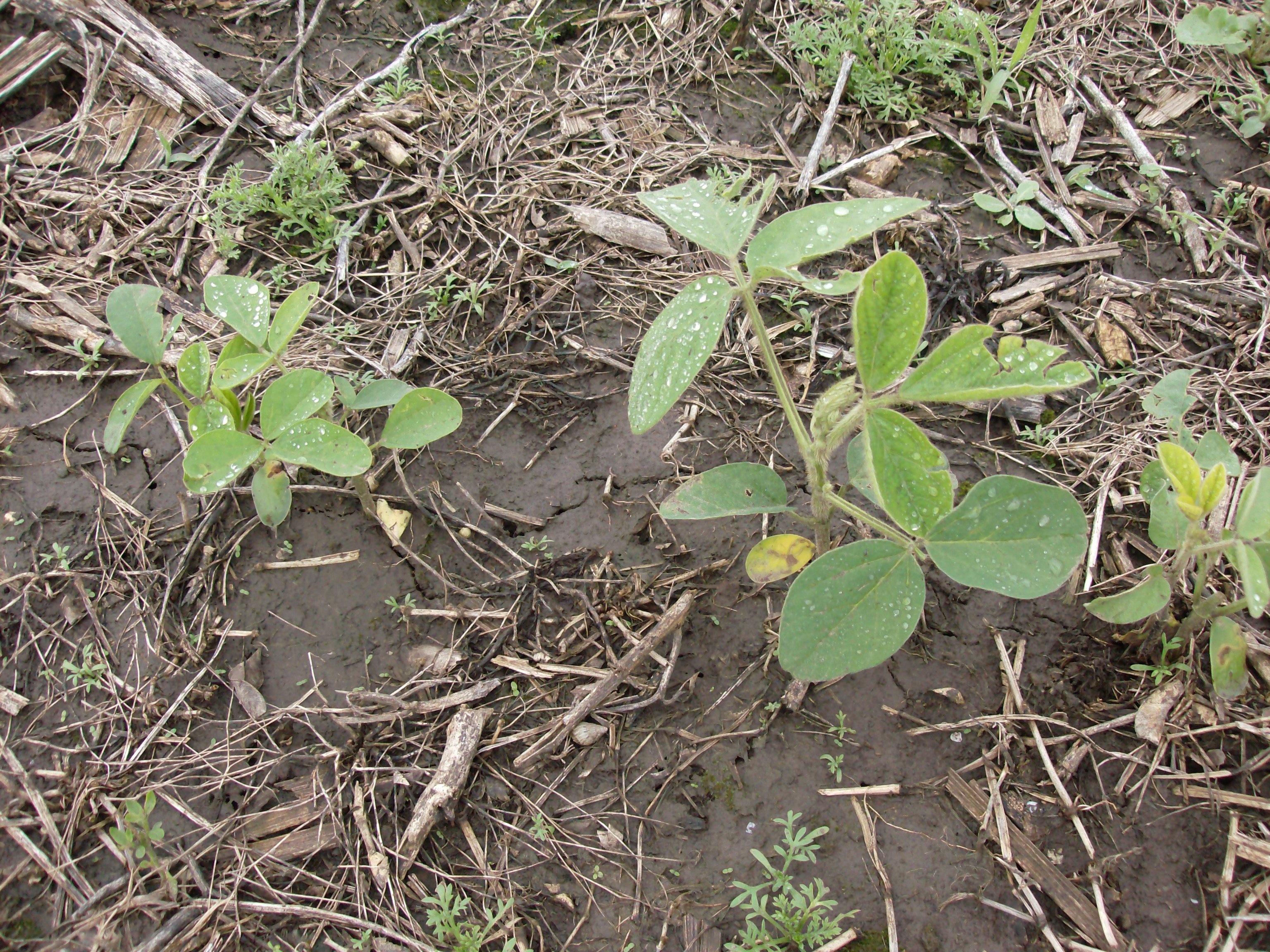
Gene-edited soybeans grow bigger seeds when planted close together
Li W, Jin J, Gu T, Cai X, Jia B
Crispr
Soybeans planted in tight rows have historically produced smaller seeds, but this edit could let farmers pack more plants into a field without sacrificing the bean size that determines harvest value.
Soybeans have genes that act like brakes on how big each seed can grow. Researchers snipped out four of these brake genes using a molecular editing tool called CRISPR, and the plants responded by producing noticeably larger, heavier seeds even when crowded together at high planting densities. Higher density plus bigger seeds means more food from the same patch of land.
Key Findings
1
Knocking out four calcium-sensing kinase genes (GsCBRLK1-4) increased soybean seed size and weight in dense planting conditions
2
The edits improved yield specifically under high-density planting, a commercially relevant scenario for maximizing field output
3
The four targeted genes act redundantly as negative regulators of seed size, requiring all four to be edited for a measurable effect
chevron_right
Technical Summary
Scientists used gene editing to disable four genes in soybeans that normally limit seed size, resulting in larger seeds and higher yields when plants are grown in dense rows.
The soybean, soy bean, or soya bean is a species of legume native to East Asia, widely grown for its edible bean. Soy is a staple crop, the world's most grown legume, and an important animal feed.