A single gene switch controls when soybeans decide to flower
Liu W, Wang Y, Xu R, Zhang L, Wang X
Crop Improvement
Soybeans are notoriously fussy about day length, which limits where farmers can grow them; unlocking this flowering gene could bring reliable, high-yielding crops to regions that currently can't support them.
Soybeans are very sensitive to day length, which means a variety bred for one region often fails to flower properly if grown somewhere else. Researchers found a specific gene, acting like a molecular on-switch, that tells the plant when to start making flowers. By tweaking this gene with modern tools, plant breeders may be able to create soybeans that flower at the right time regardless of where they're grown.
Key Findings
GmMADS17 promotes flowering in soybean, confirmed by both overexpression (early flowering) and CRISPR/Cas9 knockout (delayed flowering) experiments.
GmMADS17 physically interacts with three flowering-related proteins (GmAP1a, GmAP1c, GmAP1d), placing it inside a known regulatory network for flower timing.
One genetic variant, GmMADS17-Hap2, was nearly fixed in cultivated soybeans during domestication, suggesting humans selectively bred for early-flowering plants carrying this variant.
chevron_right Technical Summary
Scientists discovered a gene called GmMADS17 that controls when soybeans begin to flower. Manipulating this gene could help breeders develop soybean varieties that thrive across a wider range of latitudes and seasons, potentially improving yields worldwide.
Abstract Preview
Original paper
GmMADS17, a MADS-box transcription factor, promotes flowering in soybean.
Soybean is an important crop used for oil, grain and feed. Due to its strong photoperiod sensitivity, flowering is a critical developmental process regulated by multiple genes that determines repro...
open_in_new Read full abstractAbstract copyright held by the original publisher.
Species Mentioned
Was this useful?
Want to tell us more? (optional)
Thanks for the note!
Something went wrong — please try again.
Too many submissions. Try again in an hour.
Targeted knockout of a host peroxisomal peptidase confers field resistance to...
The corn in your grocery store and the staple food keeping millions of East African families fed is under serious threat from a viral disease that can wipe o...
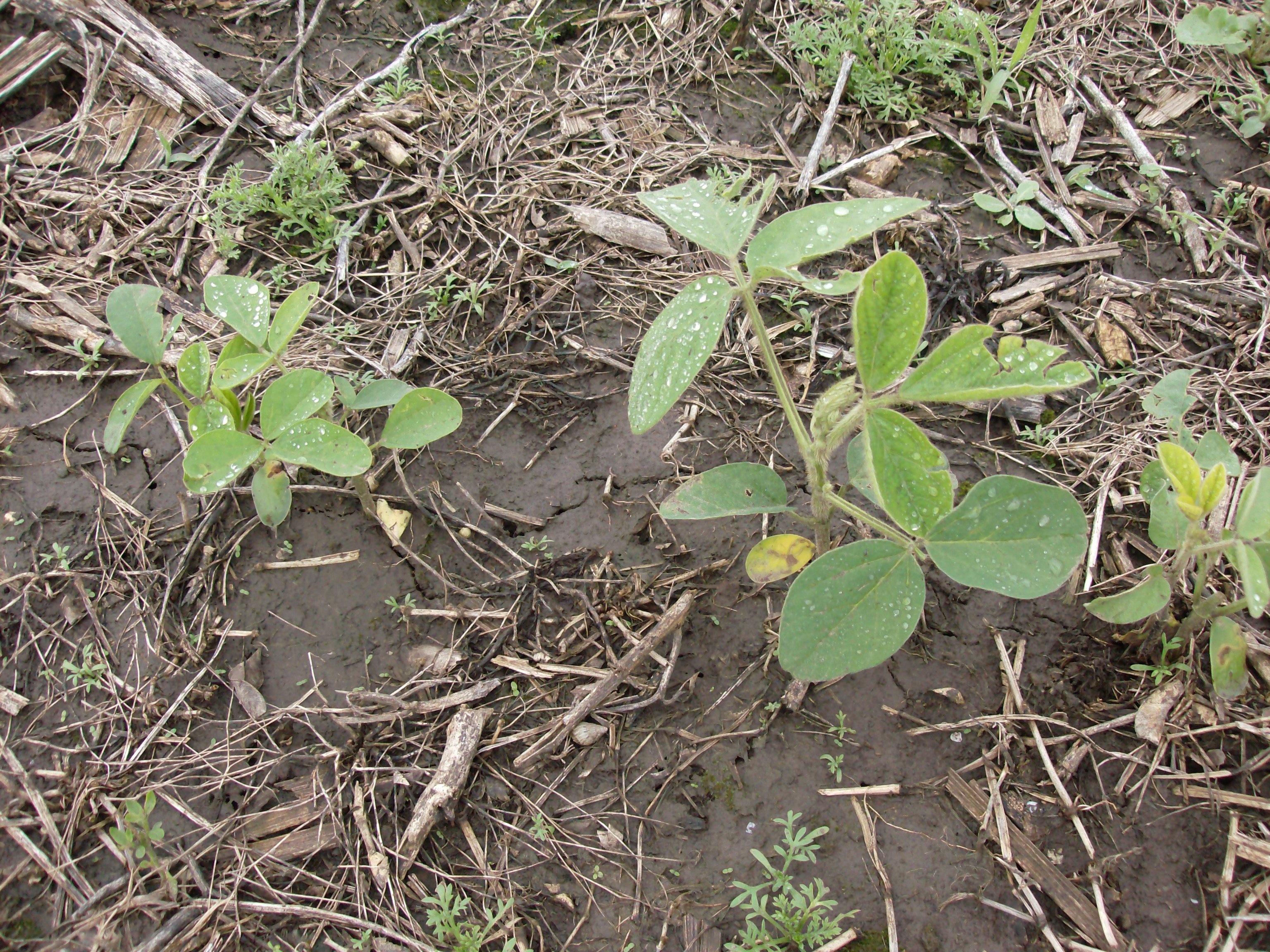
The soybean, soy bean, or soya bean is a species of legume native to East Asia, widely grown for its edible bean. Soy is a staple crop, the world's most grown legume, and an important animal feed.