Researchers mapped exactly how gray mold invades and disables Solomon's seal
Liu M, Ma W, Guo T, Xiao Z, Liu Y, Zhang S, Yuan Y, Li G, Yin F.
Fungal Disease
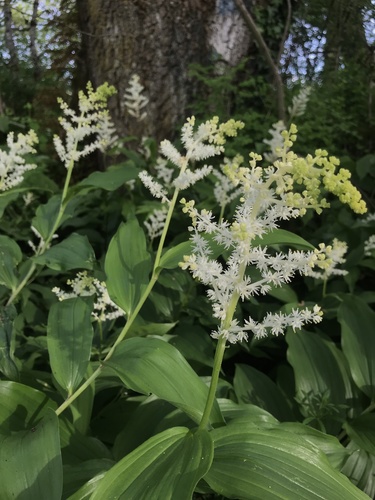
Solomon's seal lines shady garden paths across temperate gardens, and the gray mold that collapses its arching stems now has a clear biological blueprint, putting targeted treatments within reach instead of broad-spectrum fungicide sprays.
A fungus called gray mold can devastate Solomon's seal, a popular shade-garden plant also valued in traditional medicine. Researchers filmed the fungus entering leaf tissue and found it uses two strategies: punching straight through the leaf surface with a sticky secretion, or slipping in through the tiny pores leaves use to breathe. They also pinpointed the molecular signals the fungus relies on to handle the plant's internal chemistry, which opens the door to stopping it more precisely before it spreads.
Key Findings
B. deweyae penetrates P. cyrtonema leaves via two mechanisms: direct surface penetration using secreted gelatinous substances and infection cushions, or entry through stomatal pores
The MAPK signaling pathway, specifically the Hog1 gene (K04441), drives the fungus's osmotic stress response inside the host, triggering antioxidant enzyme expression for survival
Glyceride metabolism facilitates lipid transport and localization across the cell membrane, actively supporting the infection process
chevron_right Technical Summary
Scientists have mapped two distinct routes the gray mold fungus Botrytis deweyae uses to invade Solomon's seal leaves, and identified the molecular pathways it activates to survive once inside, laying groundwork for targeted treatments against this disease.
Abstract Preview
Original paper
Comparative transcriptomic analysis reveals infection strategies of <i>Botrytis deweyae</i> on <i>Polygonatum cyrtonema</i> Hua.
<i>Botrytis deweyae</i> causes gray mold on <i>Polygonatum cyrtonema</i> Hua, but its infection mechanism remains unknown. Microscopy (optical, SEM, and TEM) revealed that <i>B. deweyae</i> invades...
open_in_new Read full abstractAbstract copyright held by the original publisher.
Species Mentioned
Was this useful?
Want to tell us more? (optional)
Thanks for the note!
Something went wrong — please try again.
Too many submissions. Try again in an hour.
Targeted knockout of a host peroxisomal peptidase confers field resistance to...
The corn in your grocery store and the staple food keeping millions of East African families fed is under serious threat from a viral disease that can wipe o...
Plant pathology is the scientific study of plant diseases caused by pathogens and environmental conditions, encompassing disease identification, epidemiology, and management strategies. Understanding and controlling plant diseases is essential for maintaining food security and crop productivity, as
arrow_forward Explore topic