Nectar-stealing bees drain tubular flowers but leave seed production unharmed
Valdivia CE, Orellana JI.
Pollinators
Next time you spot a bumblebee hovering at the base of a tubular flower instead of its mouth, you're watching a nectar robber at work, and this research says the plant is likely shrugging it off.
Some bees are too small to reach nectar the normal way, so they bite a hole near the base of a flower and steal it without picking up any pollen. Researchers expected this to hurt the plant's ability to make seeds, but it didn't. As long as hummingbirds kept visiting and carrying pollen between flowers, the plant produced normal amounts of seeds even when robbers had drained the nectar.
Key Findings
Pierced flowers held roughly 9 times less nectar than intact flowers, showing primary nectar robbers severely deplete floral rewards.
Seed production per flower was statistically identical whether nectar robbers were present or absent, provided legitimate pollinators (hummingbirds) had access.
Bumblebees visited more flowers per plant while robbing than during legitimate pollination, a foraging-mode difference rather than a demonstrated causal effect of robbing on behavior.
chevron_right Technical Summary
Bumblebees that chew holes in flowers to steal nectar dramatically cut floral nectar reserves in a Chilean shrub, yet the plant still produces just as many seeds, because hummingbirds reliably deliver pollen regardless of the theft.
Abstract Preview
Original paper
Nectar Robbery by Native and Invasive Bumblebees Reduces Floral Rewards but Not Seed Production in <i>Desfontainia fulgens</i>.
Nectar robbery is common in hummingbird-pollinated plants and is often assumed to reduce plant reproductive success by depleting floral rewards and disrupting pollination. However, its quantitative...
open_in_new Read full abstractAbstract copyright held by the original publisher.
Species Mentioned
Was this useful?
Want to tell us more? (optional)
Thanks for the note!
Something went wrong — please try again.
Too many submissions. Try again in an hour.
Rapid disruption of pollination function by the invasive plant Impatiens glan...
That pretty pink-flowered plant spreading along your local riverbank or woodland edge could be quietly starving native wildflowers of the bee visits they nee...
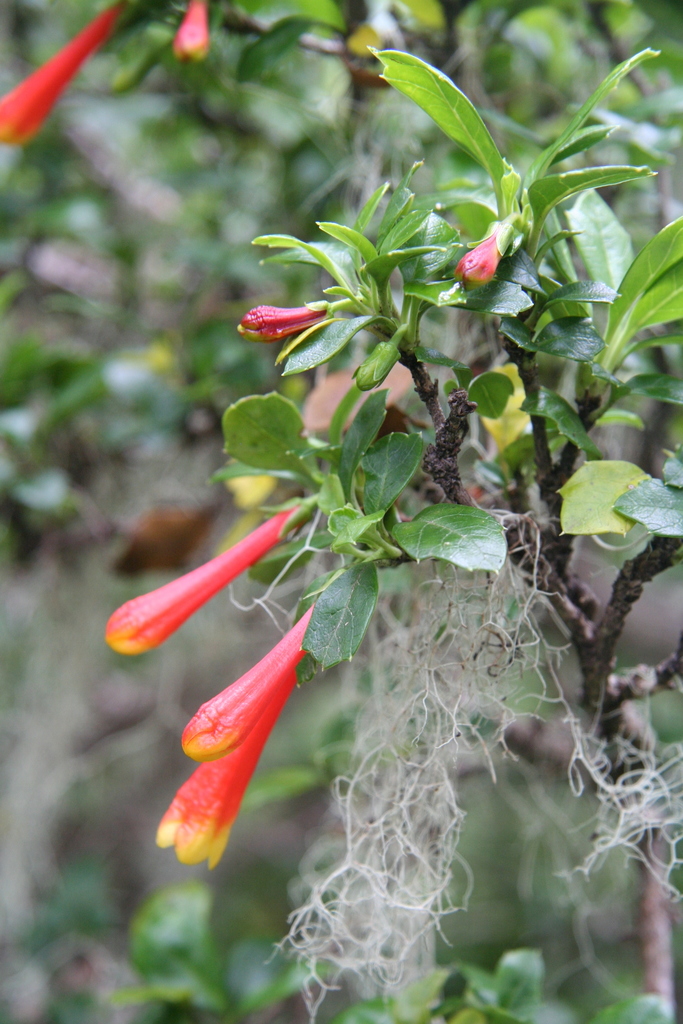
Photo (c) Heidi Meudt, taken in Araucanía, Chile. CC BY via iNaturalist.
An invasive species is an introduced organism that harms its new environment by outcompeting native flora and disrupting ecosystem balance. For plant scientists, invasive plant species represent a critical research frontier because they fundamentally alter biodiversity, compromise agricultural
arrow_forward Explore topic