Soybeans recruit soil bacteria to feed themselves with less fertilizer
Karthik Y, Nanjareddy K, Arthikala MK
Soil Health
Soybeans fix their own nitrogen from the air through root partnerships with soil bacteria, and understanding how to strengthen that partnership means the beans in your backyard garden or in the tofu on your counter could eventually be grown with far less synthetic fertilizer.
Soybean plants don't just sit passively in soil; they release chemical signals that attract specific helpful microbes to their roots, forming a living community that helps the plant feed itself, fight off disease, and handle drought. Scientists have been using powerful genetic tools to map exactly which microbes show up and why, and what they've found suggests we could breed soybeans that build better microbial teams on purpose. Getting this to work reliably on real farms is still the hard part, but the potential payoff is crops that need less chemical input to thrive.
Key Findings
Soybean roots use targeted chemical signaling and root exudate chemistry to actively recruit specific microbial communities, not passively accumulate whatever microbes are present in bulk soil.
Consortia of arbuscular mycorrhizal fungi and plant-growth-promoting rhizobacteria together cycle nutrients, produce phytohormones, and suppress disease, with measurable legacy effects on agroecosystem productivity across seasons.
Plant genotype, soil physical-chemical properties, and environmental conditions all significantly constrain microbiome assembly, making lab and greenhouse microbiome findings difficult to translate predictably to field conditions.
chevron_right Technical Summary
A review paper synthesizes what scientists now know about the microbial communities living around soybean roots, showing how the plant actively recruits beneficial microbes through chemical signals to improve nutrient uptake, stress resilience, and yield. The authors argue that combining genomics, soil chemistry, and targeted microbiome engineering could reduce soybean farming's dependence on synthetic fertilizers.
Abstract Preview
Original paper
Deciphering soybean-microbiome interactions: from rhizosphere dynamics to sustainable yield enhancement.
The soybean plant (Glycine max L.) is an important crop for valuable food source because of its high levels of protein and oil, thus contributing greatly to a sustainable system for producing food ...
open_in_new Read full abstractAbstract copyright held by the original publisher.
Species Mentioned
Was this useful?
Want to tell us more? (optional)
Thanks for the note!
Something went wrong — please try again.
Too many submissions. Try again in an hour.
Targeted knockout of a host peroxisomal peptidase confers field resistance to...
The corn in your grocery store and the staple food keeping millions of East African families fed is under serious threat from a viral disease that can wipe o...
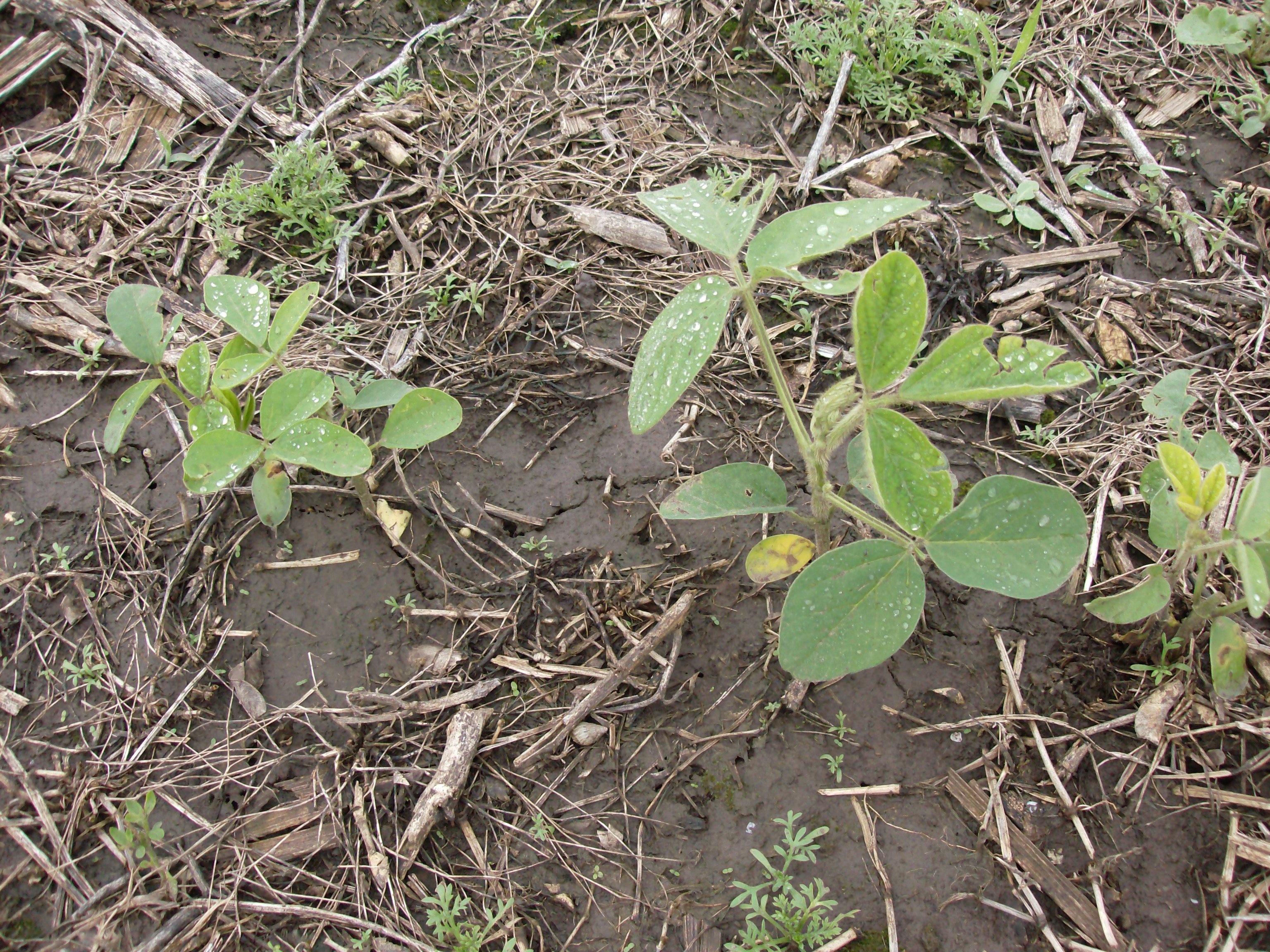
The soybean, soy bean, or soya bean is a species of legume native to East Asia, widely grown for its edible bean. Soy is a staple crop, the world's most grown legume, and an important animal feed.