Scientists mapped the genes that help soybeans survive drought and heat
Fang X, Zhang J, Fan C, Liu B, Kong F
Crispr
Soybeans quietly anchor the protein in everything from tofu to livestock feed, and the genetic toolkit this review maps is what breeders will draw on to keep harvests from collapsing as droughts lengthen and heat waves arrive earlier each season.
Soybeans are under pressure from hotter, drier, and saltier growing conditions, and plant scientists want to know which genes let some plants shrug off that stress while others wilt. This review pulls together recent work using gene-editing tools like CRISPR and large-scale gene-reading technologies to map the internal control networks soybeans use to cope. The goal is to hand breeders a clear genetic roadmap so they can develop tougher soybean varieties before climate change outpaces crop adaptation.
Key Findings
Drought, salinity, and temperature extremes are the primary abiotic stressors limiting soybean yield stability globally.
Multiple molecular approaches, including CRISPR/Cas9, transcriptomics, and transcription factor analysis, have been applied to decode stress-response networks in soybean.
The review synthesizes current knowledge into a framework intended to guide breeding of climate-resilient soybean cultivars.
chevron_right Technical Summary
Scientists reviewed how soybeans survive drought, heat, and salty soils at the molecular level, cataloguing the genetic switches and editing tools that breeders can use to grow more resilient crops as the climate shifts.
Abstract Preview
Original paper
Molecular Regulatory Network of Soybean Responses to Abiotic Stress.
Global climate change exacerbates the impact of environmental stressors such as drought, salinity and extreme temperatures on crop growth and grain yield, endangering the sustainability of the food...
open_in_new Read full abstractAbstract copyright held by the original publisher.
Species Mentioned
Was this useful?
Want to tell us more? (optional)
Thanks for the note!
Something went wrong — please try again.
Too many submissions. Try again in an hour.
Targeted knockout of a host peroxisomal peptidase confers field resistance to...
The corn in your grocery store and the staple food keeping millions of East African families fed is under serious threat from a viral disease that can wipe o...
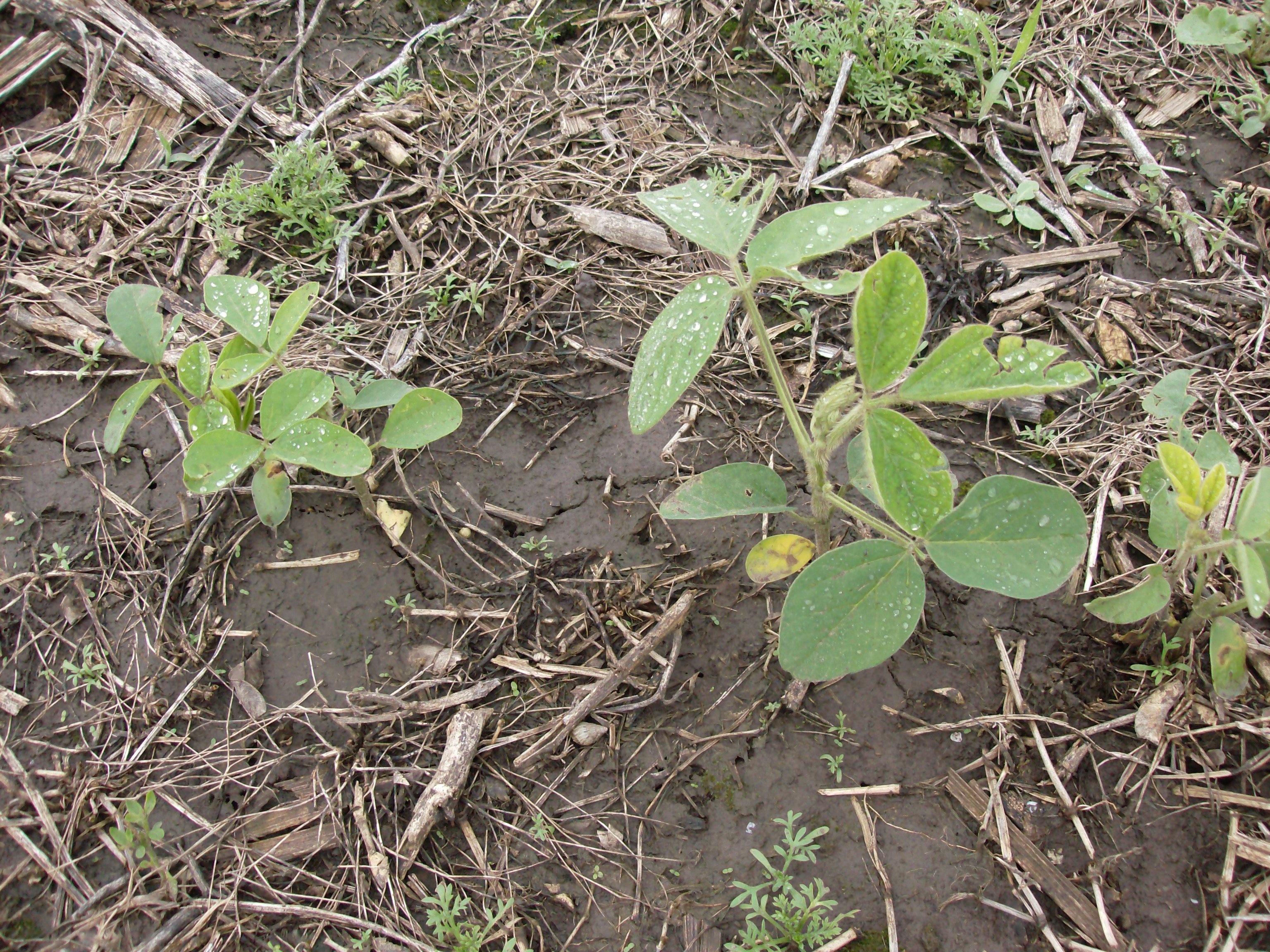
The soybean, soy bean, or soya bean is a species of legume native to East Asia, widely grown for its edible bean. Soy is a staple crop, the world's most grown legume, and an important animal feed.