More flowers, more pollinators, less fruit: drought increases insect visitation but reduces yield in cucumber.
Fantasia ME, Penick CA
Climate Adaptation
Your cucumber vines buzzing with bees during a dry summer aren't thriving — they're stressed, pumping out male flowers to lure pollinators while quietly aborting the female flowers that would become your harvest.
When cucumber plants don't get enough water, they respond by making more flowers — especially male ones — which actually draws in more bees and other pollinators than usual. But despite all that extra pollinator activity, the plants still produce fewer cucumbers of lower quality. It turns out the problem isn't a lack of bees; the plants are physically unable to develop fruit because they're too stressed from the drought.
Key Findings
Water-limited cucumber plants produced more flowers than well-watered plants, with drought-tolerant cultivars showing an especially large increase in floral display.
Drought strongly shifted flower sex ratios toward male flowers, yet total nectar availability was maintained on average, keeping pollinator energy rewards intact or even increased via extra pollen.
Despite higher pollinator visitation rates under drought, fruit quantity and quality declined, pointing to physiological limitations like female flower abortion rather than pollination failure.
chevron_right Technical Summary
Drought-stressed cucumber plants produce more flowers and attract more pollinators, yet still yield fewer and lower-quality fruits — meaning the bottleneck is the plant's physiology, not pollination failure.
Abstract Preview
Climate change intensifies drought frequency, posing risks to pollinators both directly and indirectly through changes in floral resource availability. We tested how water limitation alters pollina...
open_in_new Read full abstractAbstract copyright held by the original publisher.
Species Mentioned
Was this useful?
Want to tell us more? (optional)
Thanks for the note!
Something went wrong — please try again.
Too many submissions. Try again in an hour.
Targeted knockout of a host peroxisomal peptidase confers field resistance to...
The corn in your grocery store and the staple food keeping millions of East African families fed is under serious threat from a viral disease that can wipe o...
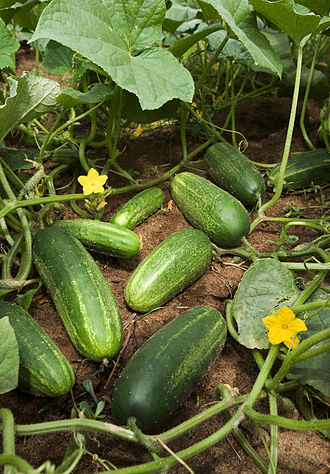
The cucumber is a widely-cultivated creeping vine plant in the family Cucurbitaceae that bears cylindrical to spherical fruits, used as culinary vegetables. Considered an annual plant, there are three main types of cucumber—slicing, pickling, and seedless.