Pseudomonads associated to salt-stressed plants facilitate stress adaption of soybean through enhanced lignin biosynthesis.
Zheng Y, Wang Y, Wang Z, Li Z, Todd JD
Soil Health
Soybeans grown in fields edging toward salt-damaged soil—a creeping reality in many irrigated farming regions—may soon be protected by the very microbes already living in stressed roots, no genetic engineering required.
Scientists found that a group of helpful bacteria naturally flock to plant roots when those plants are struggling with salty soil. Instead of directly counteracting the salt, these bacteria signal the plant to build more of its own internal scaffolding—a tough material called lignin that reinforces cell walls and helps the plant stay upright and functional under stress. When researchers tested this in soybeans both in pots and in actual farm fields, the bacteria consistently helped the plants grow better in salty conditions.
Key Findings
Pseudomonad bacteria were consistently enriched in salt-stressed roots across multiple soil types and most crop species tested, suggesting a broadly conserved beneficial relationship.
The bacteria improved soybean salt tolerance by stimulating plant lignin biosynthesis—not by altering sodium balance—with overexpression of key lignin genes (GmCAD, GmCOMT, Gm4CL) alone being sufficient to enhance growth under salt stress.
Mutant soybean plants unable to produce lignin normally lost all pseudomonad-conferred salt tolerance, confirming lignin biosynthesis as the essential mechanistic link.
chevron_right Technical Summary
Certain soil bacteria called pseudomonads naturally colonize the roots of salt-stressed plants and help them survive by boosting the plant's own production of lignin—the structural material that stiffens plant cell walls—rather than by managing salt directly. This discovery, confirmed in soybeans under both greenhouse and real field conditions, reveals a new biological pathway that could be harnessed to grow crops in increasingly salty soils.
Abstract Preview
Root-associated microbiota play a critical role in plant tolerance to salt stress. However, the conservation of beneficial interactions across diverse crops and soils and the underlying mechanisms ...
open_in_new Read full abstractAbstract copyright held by the original publisher.
Species Mentioned
Was this useful?
Want to tell us more? (optional)
Thanks for the note!
Something went wrong — please try again.
Too many submissions. Try again in an hour.
Targeted knockout of a host peroxisomal peptidase confers field resistance to...
The corn in your grocery store and the staple food keeping millions of East African families fed is under serious threat from a viral disease that can wipe o...
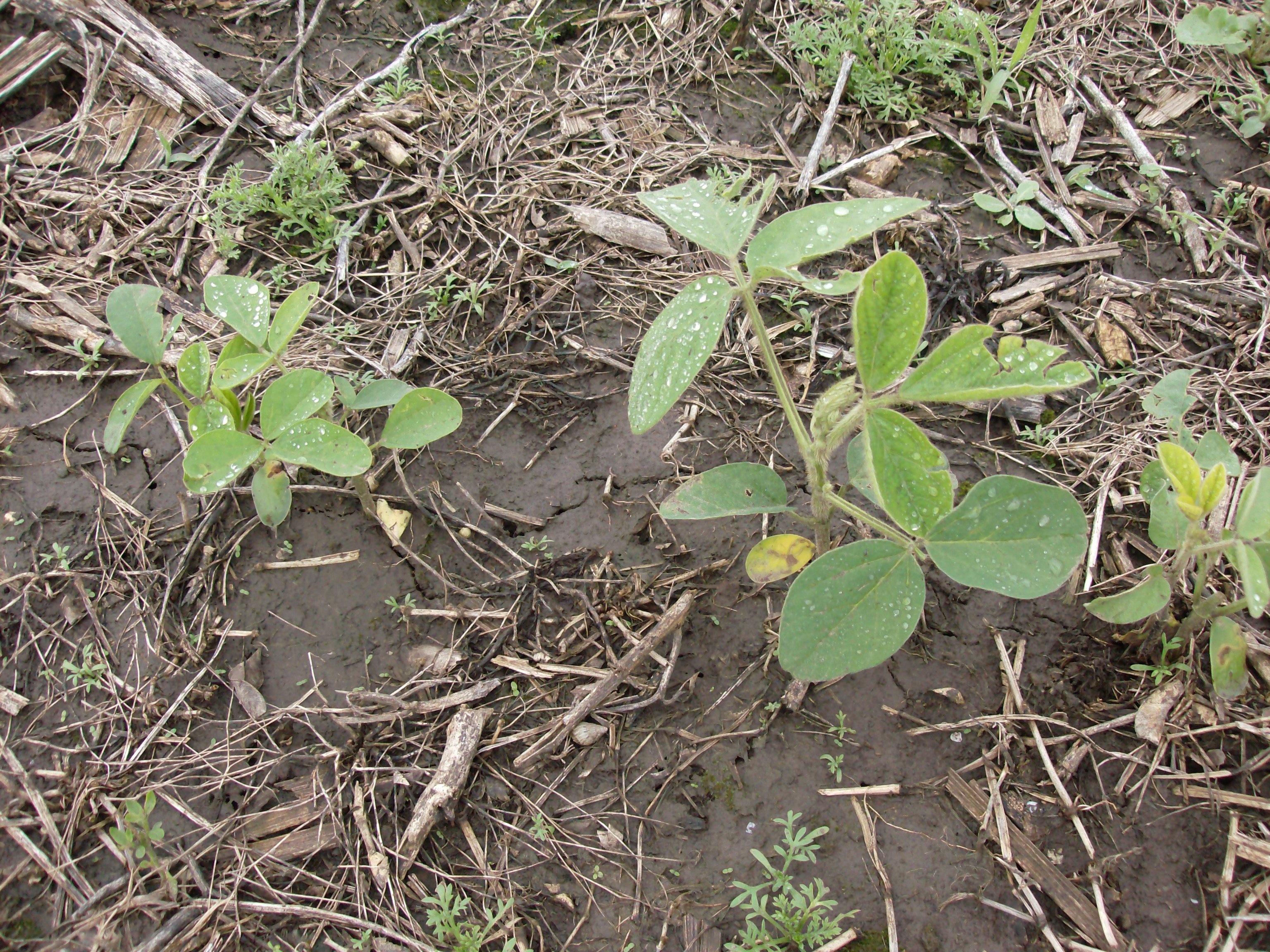
The soybean, soy bean, or soya bean is a species of legume native to East Asia, widely grown for its edible bean. Soy is a staple crop, the world's most grown legume, and an important animal feed.