Ethylene-mediated CsWRKY41 regulates the PYL-PP2C module to promote adventitious root formation in cucumber under waterlogging stress.
Hu Q, Jing B, Bian Y, Yang Z, Yang X
Plant Signaling
Cucumbers in your garden are naturally wired to sprout emergency roots from their stems during a prolonged soak — and scientists have now mapped the molecular switch behind that lifeline, pointing toward flood-tougher varieties for the increasingly waterlogged growing seasons ahead.
When cucumber plants get flooded, they can grow new roots from their stems as a survival trick. Scientists found the master switch for this process: a stress hormone called ethylene turns on a protein that then quietly hijacks the plant's drought-response system, repurposing it to push out those life-saving roots. The process even involves a controlled burst of hydrogen peroxide inside the plant, which acts as a signal to spur the new roots into forming.
Key Findings
CRISPR knockout of CsWRKY41 significantly impaired adventitious root formation in flooded cucumbers, while overexpression enhanced it — confirming it as a master regulator of flood survival.
CsWRKY41 acts as both an activator and a repressor within the same pathway, switching on the ABA receptor CsPYL4 while simultaneously silencing the phosphatase CsPP2C24 to tip the hormonal balance toward root growth.
Overexpression of the ABA receptor CsPYL4 upregulated the peroxidase gene CsPrx2 and increased hydrogen peroxide accumulation inside the hypocotyl, directly promoting new root development.
chevron_right Technical Summary
Researchers identified how cucumbers survive flooding by growing emergency roots from their stems. Waterlogging triggers ethylene, which activates a transcription factor that rewires abscisic acid signaling — normally a drought-stress circuit — to instead fuel root growth and keep the plant alive.
Abstract Preview
Waterlogging stress significantly compromises crop growth and yield. In cucumber (Cucumis sativus L.), the formation of adventitious roots (ARs) is a critical morphological adaptation for survival....
open_in_new Read full abstractAbstract copyright held by the original publisher.
Species Mentioned
Was this useful?
Want to tell us more? (optional)
Thanks for the note!
Something went wrong — please try again.
Too many submissions. Try again in an hour.
Targeted knockout of a host peroxisomal peptidase confers field resistance to...
The corn in your grocery store and the staple food keeping millions of East African families fed is under serious threat from a viral disease that can wipe o...
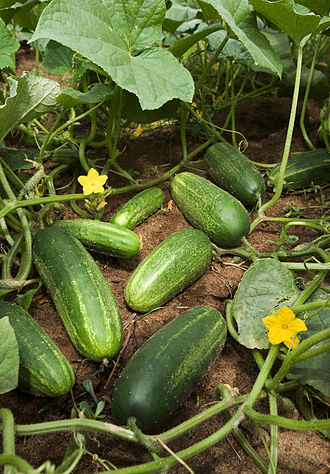
The cucumber is a widely-cultivated creeping vine plant in the family Cucurbitaceae that bears cylindrical to spherical fruits, used as culinary vegetables. Considered an annual plant, there are three main types of cucumber—slicing, pickling, and seedless.