GmENDO-like 1, a structurally divergent homolog of S1/P1-type endonuclease, modulates the vegetative-to-reproductive phase transition in soybean.
Gong Q, Liu H, Nie Q, Tong J, Li W
Crispr
Soybean breeders now have a precise genetic dial for controlling flowering time — the same kind of lever that, over decades, turned a day-length-sensitive Asian crop into one that grows from Minnesota to Mississippi.
Inside soybean plants, researchers found a gene that acts like a timer, telling the plant when to stop growing and start making flowers and seeds. When they switched that gene off using a molecular scissors tool called CRISPR, the plants were late to flower and their leaves aged too quickly, like a clock running out of sync. The plants with the broken gene also produced fewer and lighter seeds, showing just how important this timing gene is for a good harvest.
Key Findings
Knocking out GmENDO-like 1 with CRISPR significantly delayed flowering time in soybean plants.
Loss of the gene caused premature leaf senescence (early aging) and reduced both 100-seed weight and per-plant yield.
Despite losing four of the nine amino acids needed for normal enzyme function, GmENDO-like 1 still retains catalytic (cutting) activity — an unusual evolutionary finding.
chevron_right Technical Summary
Scientists discovered a gene in soybeans that controls when the plant switches from growing leaves to producing flowers and seeds. Removing this gene delays flowering and causes leaves to age faster, reducing seed yield.
Abstract Preview
GmENDO-like 1, a structurally divergent S1/P1 endonuclease homolog, modulates soybean vegetative-to-reproductive transition; its knockout delays flowering and accelerates leaf senescence. Soybean i...
open_in_new Read full abstractAbstract copyright held by the original publisher.
Species Mentioned
Was this useful?
Want to tell us more? (optional)
Thanks for the note!
Something went wrong — please try again.
Too many submissions. Try again in an hour.
Targeted knockout of a host peroxisomal peptidase confers field resistance to...
The corn in your grocery store and the staple food keeping millions of East African families fed is under serious threat from a viral disease that can wipe o...
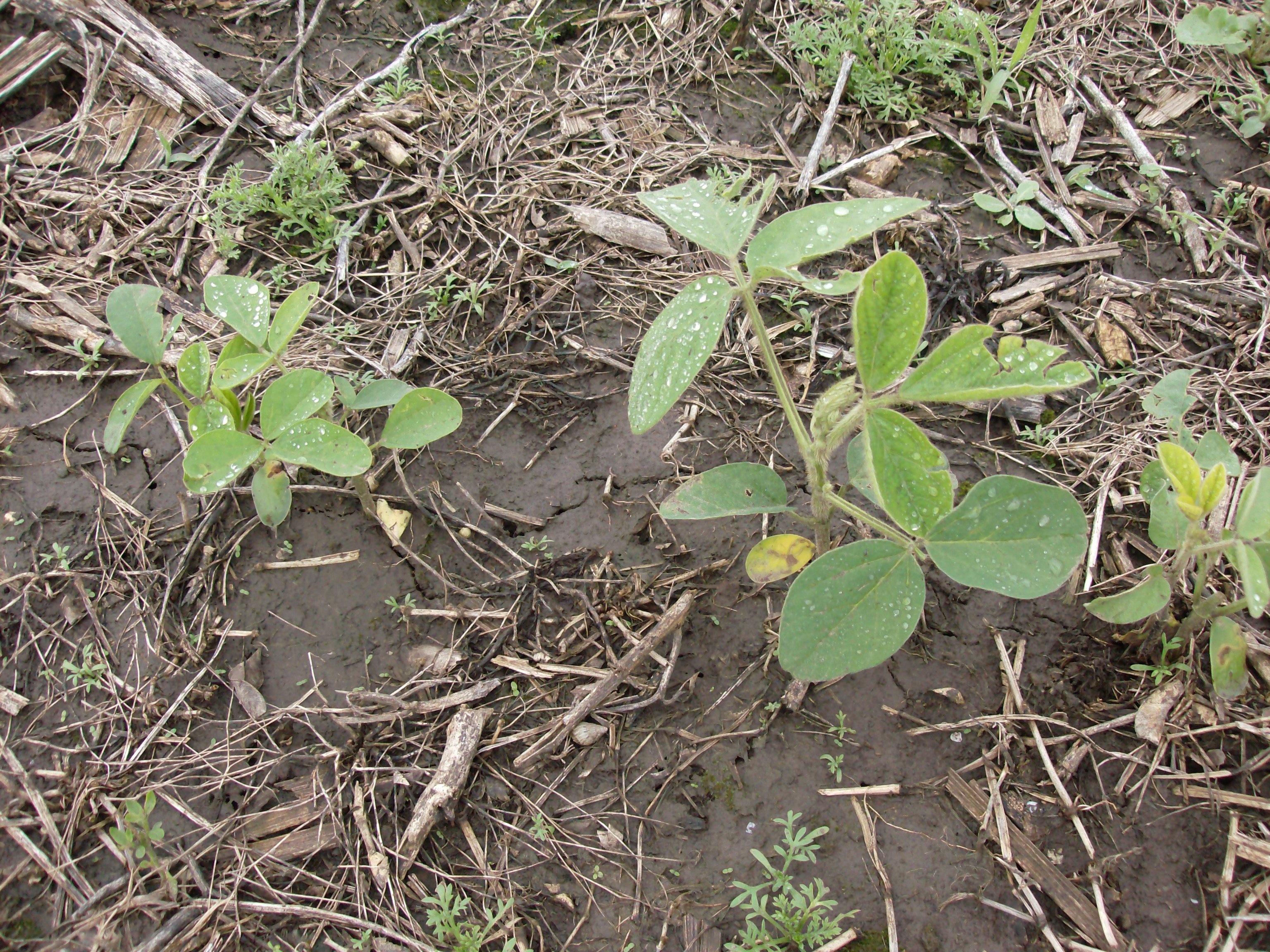
The soybean, soy bean, or soya bean is a species of legume native to East Asia, widely grown for its edible bean. Soy is a staple crop, the world's most grown legume, and an important animal feed.