Jasmonate regulates male sterility in cucumber.
Liang H, Liu S, Yan T, Wang H, Li J
Plant Signaling
Every cucumber in your garden depends on viable pollen reaching female flowers — this research uncovers the hormone pathway that determines whether that pollen even works, opening a path to breeding more reliable fruiting under stress.
Cucumbers make separate male and female flowers, and a hormone called jasmonate acts like a master switch that tells both types of flowers to open and the pollen to mature properly. When researchers bred plants that couldn't make this hormone, the flowers stayed closed and the pollen died before it could do its job. They then traced a chain of three proteins that carry the hormone's message into the genes responsible for building strong, healthy pollen-releasing structures.
Key Findings
Cucumber plants unable to produce jasmonate (the Csopr3 mutant) had flowers that failed to open and pollen that ruptured and became nonviable.
Applying a synthetic form of jasmonate (MeJA) to deficient mutants fully rescued normal flower opening, anther dehiscence, and pollen germination ability.
A regulatory cascade was identified: the protein CsMYC2 activates two WRKY transcription factors (CsWRKY45 and CsWRKY57), which in turn suppress CsXTH33, a cell-wall remodeling gene that otherwise impairs stamen fertility.
chevron_right Technical Summary
Scientists discovered that a plant hormone called jasmonate controls whether cucumber flowers open properly and whether pollen is viable. They also mapped out the chain of molecular switches that carry this hormone's signal into the cell machinery that builds healthy stamens.
Abstract Preview
Male sterility affects various agronomic traits. Although jasmonate (JA) has been shown to influence fertility in several plant species, most research on JA-mediated regulation of fertility has foc...
open_in_new Read full abstractAbstract copyright held by the original publisher.
Species Mentioned
Was this useful?
Want to tell us more? (optional)
Thanks for the note!
Something went wrong — please try again.
Too many submissions. Try again in an hour.
Targeted knockout of a host peroxisomal peptidase confers field resistance to...
The corn in your grocery store and the staple food keeping millions of East African families fed is under serious threat from a viral disease that can wipe o...
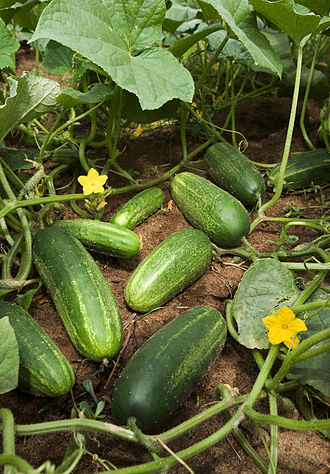
The cucumber is a widely-cultivated creeping vine plant in the family Cucurbitaceae that bears cylindrical to spherical fruits, used as culinary vegetables. Considered an annual plant, there are three main types of cucumber—slicing, pickling, and seedless.