CRISPR/Cas9-mediated genome editing reveals the involvement of a polyphenol oxidase in the shikonin-specific biosynthesis in Lithospermum erythrorhizon.
Nakanishi K, Takano Y, Yamamoto K, Matsuda Y, Yano M
Crispr
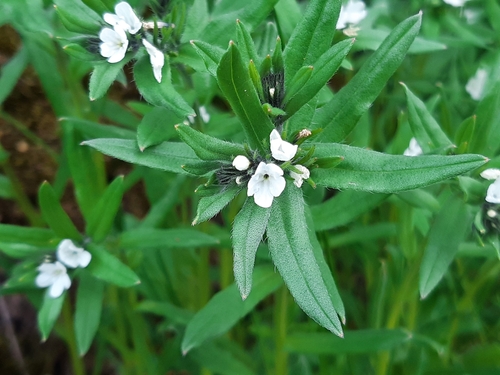
Gromwell's deep-red root dye has colored textiles and lip balms for centuries, and unlocking the enzyme behind it brings us closer to producing this natural pigment — and its cancer-fighting compounds — without wildcrafting rare plants.
Gromwell, a plant used in traditional medicine and natural dyeing for thousands of years, makes a red compound in its roots called shikonin. Researchers always knew copper was needed to make shikonin but couldn't figure out which step required it — until now. By using CRISPR gene editing to disable a specific protein, they showed it's responsible for a key ring-forming step in shikonin production, finally explaining copper's role.
Key Findings
Disabling the LePPO1 gene using CRISPR caused a marked reduction in shikonin content across all edited plant lines, confirming its essential role.
Of five polyphenol oxidase genes expressed in Lithospermum erythrorhizon, only LePPO1 showed expression tightly correlated with shikonin production.
LePPO1 is localized inside plastids, yet shikonin accumulates in the apoplast (outside cells), revealing an unexpected subcellular transport step in the pathway.
chevron_right Technical Summary
Scientists used gene-editing (CRISPR) to identify a key enzyme — a polyphenol oxidase called LePPO1 — that is essential for producing shikonin, a red pigment and medicinal compound made by the plant Lithospermum erythrorhizon (gromwell). Knocking out this gene dramatically reduced shikonin levels, solving a 40-year mystery about why copper is required in its biosynthesis.
Abstract Preview
Shikonin, a 1,4-naphthoquinone derivative produced by some limited Boraginaceae species, exhibits unique pharmacological properties and is also used as a natural dye. The regulatory factors of shik...
open_in_new Read full abstractAbstract copyright held by the original publisher.
Species Mentioned
Was this useful?
Want to tell us more? (optional)
Thanks for the note!
Something went wrong — please try again.
Too many submissions. Try again in an hour.
Targeted knockout of a host peroxisomal peptidase confers field resistance to...
The corn in your grocery store and the staple food keeping millions of East African families fed is under serious threat from a viral disease that can wipe o...
Medicinal plants are species that produce bioactive chemical compounds with therapeutic applications, a characteristic studied extensively in ethnobotanical and phytochemical research. This field is vital to plant science because it reveals how plants evolved complex chemical defense and secondary
arrow_forward Explore topic