Lead remediation capabilities of three shrub willow clones and the cellular, physiological and molecular responses of Salix integra to Lead stress.
Xin Y, Huang R, Zeng W, Feng Y, Xu LA
Phytoremediation
If you live near a busy road or old industrial site, shrub willows planted along the boundary could quietly pull toxic lead out of your soil over a few growing seasons — no excavation required.
Scientists tested three types of shrub willow to see how well they could soak up lead from polluted soil, and all three performed impressively. When they looked closely at the cells of one willow variety, they found that lead gets trapped mostly in the cell wall and fluid-filled pockets inside root cells, keeping it from causing too much damage. The plant also ramps up a protective enzyme that helps it survive and keep absorbing lead even under stress.
Key Findings
All 3 shrub willow species showed strong lead-removal capabilities from soil, with measurable differences between individual clones.
Visible poisoning symptoms (wilting, leaf yellowing) appeared after just 3 days at 0.3 mM lead concentration, but plants survived and continued functioning.
Glutathione S-transferase activity was identified as the most critical indicator of lead tolerance, with multiple related genes showing significant upregulation under lead stress.
chevron_right Technical Summary
Shrub willows can pull lead out of contaminated soil, and researchers identified the key molecular mechanism behind this ability — an enzyme called Glutathione S-transferase that helps the plant neutralize lead at the cellular level.
Abstract Preview
The production of lead (Pb) -acid batteries and the emission of vehicle exhaust have been increasingly contributing to soil Pb(Ⅱ) pollution in recent years. Pb(Ⅱ) is a highly stable and hazardous h...
open_in_new Read full abstractAbstract copyright held by the original publisher.
Species Mentioned

Was this useful?
Want to tell us more? (optional)
Thanks for the note!
Something went wrong — please try again.
Too many submissions. Try again in an hour.
Nanoplastics interfere with plant-mycorrhizal communication and limit plant growth.
Microplastics breaking down in your garden soil are quietly strangling the beneficial fungi that help your vegetables absorb phosphorus and other nutrients, ...
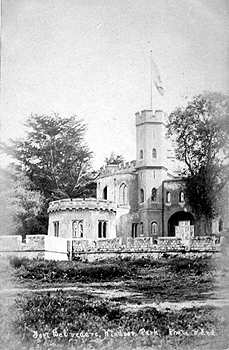
Fort Belvedere is a Grade II* listed country house on Shrubs Hill in Windsor Great Park, in Surrey, England. The fort was built as a folly by Henry Flitcroft in 1750–1755, and was later predominantly re-constructed by Jeffry Wyatville in a Gothic Revival style in the 1820s.