WOX5 expression stimulated by the transcription factor NF-YAc reprograms cortical cells for nodule primordium initiation in soybean.
Li L, Chen Y, Zhu R, Shi K, Tu T
Nitrogen Fixation
Every legume cover crop you turn under to rebuild your garden soil is running this exact genetic program to pull free nitrogen from the air — and scientists just found the on-switch, cracking open a path to crops that might do the same without a bag of fertilizer.
Soybeans and their relatives can skip synthetic fertilizer because they host soil bacteria in tiny root bumps called nodules, where those bacteria convert air into plant-usable nitrogen. Scientists found the gene — WOX5 — that tells ordinary root cells to transform and build these nodules the moment the right bacteria arrive. When they switched this gene off using CRISPR editing, plants formed far fewer nodules and fixed much less nitrogen, proving WOX5 is the essential trigger for the whole partnership to begin.
Key Findings
WOX5 is switched on specifically in the root cortical cells that will become nodule primordia — activated by rhizobium bacteria — making it the earliest known developmental trigger for nodule formation in soybean
CRISPR knockout of all three WOX5 gene copies reduced nodule number and nitrogenase activity by cutting primordium formation, not by blocking bacterial infection of the root
The transcription factor NF-YAc directly binds a 442 bp legume-specific promoter region to activate WOX5; loss of NF-YAc mimics the full wox5 knockout, and NF-YAc overexpression cannot rescue nodulation without WOX5 present
chevron_right Technical Summary
Scientists identified the molecular switch that tells soybean root cells to transform and build nitrogen-fixing nodules: a gene called WOX5, activated by soil bacteria and controlled by an upstream regulator called NF-YAc. Disrupting this switch with CRISPR reduced nodule formation and cut nitrogen fixation, revealing the critical first step in a partnership that lets legumes grow without synthetic fertilizer.
Abstract Preview
Reprogramming of differentiated root cortical cells into proliferative stem cells is a prerequisite for legume nodule organogenesis, yet the molecular trigger that confers stem-cell identity upon t...
open_in_new Read full abstractAbstract copyright held by the original publisher.
Species Mentioned
Was this useful?
Want to tell us more? (optional)
Thanks for the note!
Something went wrong — please try again.
Too many submissions. Try again in an hour.
Targeted knockout of a host peroxisomal peptidase confers field resistance to...
The corn in your grocery store and the staple food keeping millions of East African families fed is under serious threat from a viral disease that can wipe o...
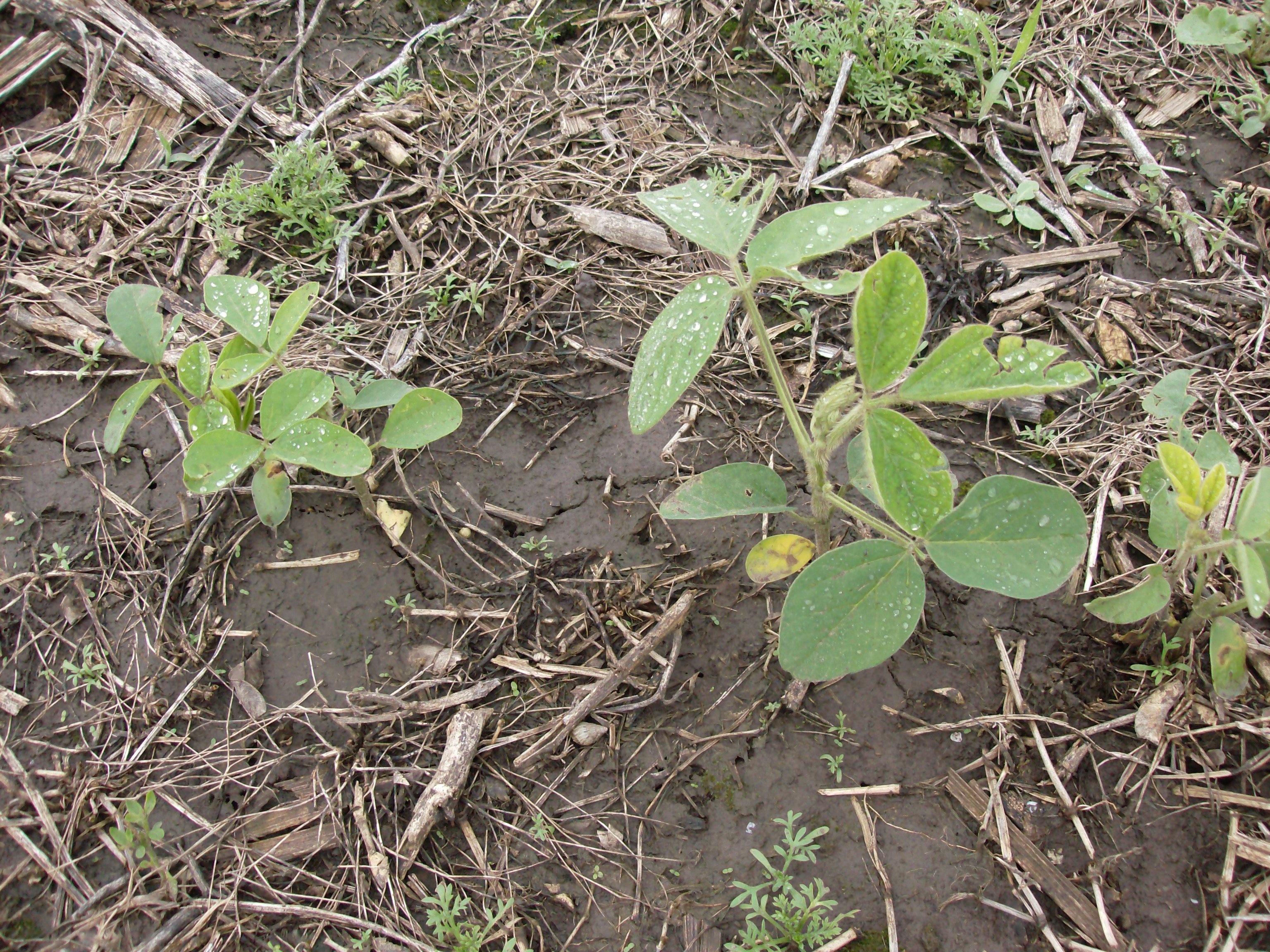
The soybean, soy bean, or soya bean is a species of legume native to East Asia, widely grown for its edible bean. Soy is a staple crop, the world's most grown legume, and an important animal feed.