Diversity-triggered 2-naphthoic acid exudation recruits keystone microbial taxa to promote soybean drought tolerance.
Chen S, Wang Y, Chen B, Hou X, Liu S
Soil Health
Farmers growing soybeans through increasingly brutal summer droughts may one day treat seeds with a simple soil microbe and a root chemical to keep harvests stable without extra irrigation.
When soybean roots are surrounded by a rich, diverse community of soil microbes, the plants handle drought much better. Scientists discovered that drought-stressed plants release a specific chemical from their roots that acts like a beacon, attracting a particular helpful bacterium. That bacterium then boosts the plant's ability to absorb nutrients and keep photosynthesizing even when water is scarce.
Key Findings
Higher rhizosphere microbial diversity directly improved soybean survival and performance under drought conditions, established through controlled dilution experiments.
2-naphthoic acid accumulates exclusively under drought and acts as a chemical signal that selectively recruits the beneficial bacterium Sinorhizobium CS204 via chemotaxis.
Co-application of 2-naphthoic acid and Sinorhizobium CS204 significantly enhanced plant nutrient acquisition, nitrogen fixation, and photosynthesis under drought stress.
chevron_right Technical Summary
Soybeans with more diverse soil microbes around their roots survive drought better — and scientists found the chemical signal that makes it work: a compound called 2-naphthoic acid that the plant releases under stress to recruit a specific beneficial bacterium.
Abstract Preview
Rhizosphere microbiomes are essential for plant growth and stress tolerance, yet how microbial diversity shapes drought resilience in soybean remains unclear. Here, we demonstrate that high rhizosp...
open_in_new Read full abstractAbstract copyright held by the original publisher.
Species Mentioned
Was this useful?
Want to tell us more? (optional)
Thanks for the note!
Something went wrong — please try again.
Too many submissions. Try again in an hour.
Targeted knockout of a host peroxisomal peptidase confers field resistance to...
The corn in your grocery store and the staple food keeping millions of East African families fed is under serious threat from a viral disease that can wipe o...
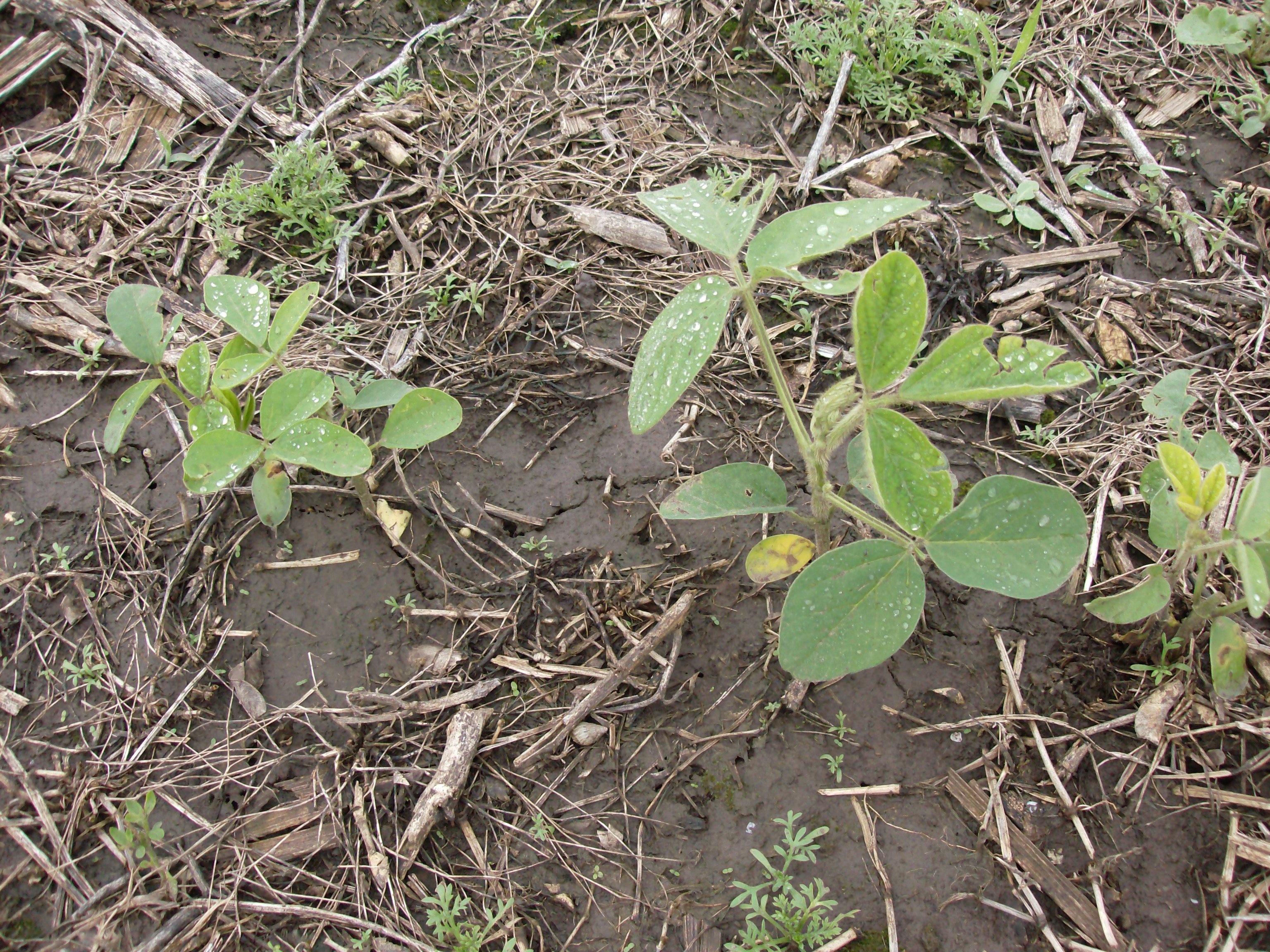
The soybean, soy bean, or soya bean is a species of legume native to East Asia, widely grown for its edible bean. Soy is a staple crop, the world's most grown legume, and an important animal feed.