Diversity recruits resilience via metabolite signaling.
Li XT, Feng J
Soil Health
The more diverse the soil life beneath your garden beds, the better your plants may weather a dry summer — making every decision to skip tilling or add compost a small act of drought-proofing.
Plants don't fight drought alone — the tiny living world in the soil around their roots plays a huge role. Scientists found that when this underground community is rich and varied, it sends chemical messages to soybean plants that help them survive dry spells. The more diverse the soil life, the stronger and more targeted that help becomes.
Key Findings
Microbial community diversity in the rhizosphere — the soil zone directly around roots — is linked to improved drought resilience in soybeans.
Diverse microbial communities produce metabolite signals that influence how the plant responds to water stress and which microbes get selectively recruited to the roots.
Community complexity drives a self-reinforcing loop: diversity shapes host metabolism, which in turn shapes further microbiome assembly and beneficial taxa recruitment.
chevron_right Technical Summary
Soil microbes around soybean roots form communities whose diversity directly programs the plant to handle drought better, partly by sending chemical signals that shape which helpful microbes get recruited.
Abstract Preview
The rhizosphere microbiome drives plant stress resilience. In this issue of Cell Host & Microbe, Chen et al. show that microbial diversity programs drought adaptation in soybeans by linking communi...
open_in_new Read full abstractAbstract copyright held by the original publisher.
Species Mentioned
Was this useful?
Want to tell us more? (optional)
Thanks for the note!
Something went wrong — please try again.
Too many submissions. Try again in an hour.
Targeted knockout of a host peroxisomal peptidase confers field resistance to...
The corn in your grocery store and the staple food keeping millions of East African families fed is under serious threat from a viral disease that can wipe o...
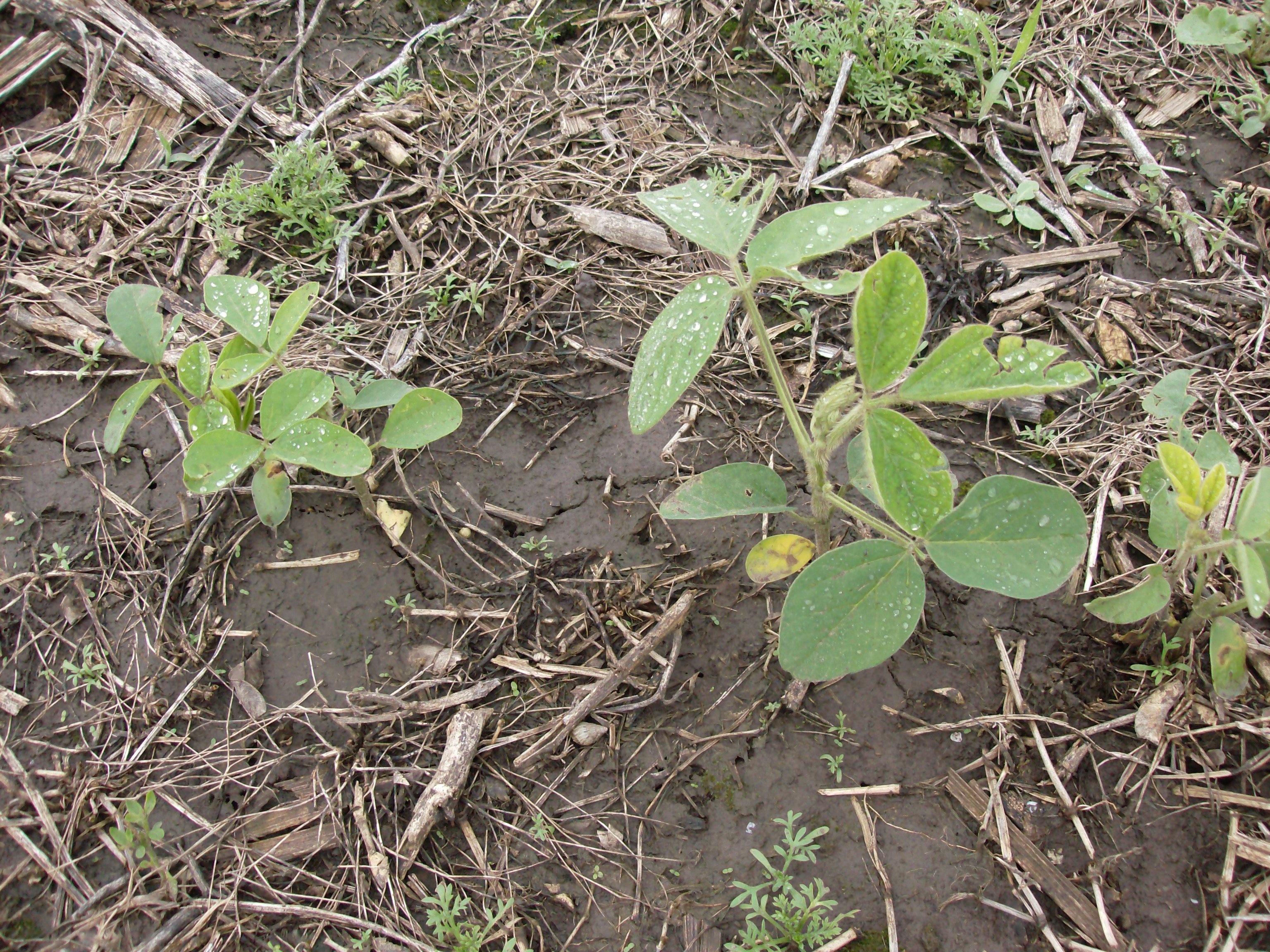
The soybean, soy bean, or soya bean is a species of legume native to East Asia, widely grown for its edible bean. Soy is a staple crop, the world's most grown legume, and an important animal feed.