miR164c-CUC2 Module Modulates Salinity Stress Tolerance in Soybean by Regulating Abscisic Acid Signalling and Reactive Oxygen Species Scavenging Pathways.
Wang SJ, Yu TF, Wu SY, Yu SJ, Ge WY
Crispr
Soybean fields worldwide are slowly losing ground to creeping soil salinity, and this discovery hands breeders a precise genetic dial to turn up salt tolerance without sacrificing yield.
Soybeans struggle to grow in salty soil, which is an increasingly common problem as land degrades. Researchers found a tiny molecule inside the plant that acts like a volume knob — when turned up, it silences a protein that normally blocks the plant's salt defenses, letting the plant better manage stress and stay healthier. This gives plant breeders a clear genetic target to develop soybean varieties that can thrive where today's crops fail.
Key Findings
Knocking out miR164c using CRISPR made soybeans more sensitive to salt, while overexpressing it improved tolerance — confirming this small RNA is a key controller of salt stress response.
miR164c works by suppressing GmCUC2, a transcription factor that otherwise blocks both the plant's stress-hormone (ABA) signaling and its reactive-oxygen-species cleanup system.
Two downstream proteins (GmCAR1 and GmCAR2) were identified as direct targets repressed by GmCUC2; overexpressing either one independently improved soybean salt tolerance.
chevron_right Technical Summary
Scientists identified a genetic switch in soybeans that controls how well the plant survives salty soil. By boosting a small RNA molecule called miR164c — which silences a stress-worsening gene — soybeans activate their own defenses against salt damage.
Abstract Preview
Soil salinisation-induced salinity stress severely inhibits soybean growth and development. MicroRNA164 (miR164) modulates plant responses to salinity stress; however, the underlying regulatory mec...
open_in_new Read full abstractAbstract copyright held by the original publisher.
Species Mentioned
Was this useful?
Want to tell us more? (optional)
Thanks for the note!
Something went wrong — please try again.
Too many submissions. Try again in an hour.
Targeted knockout of a host peroxisomal peptidase confers field resistance to...
The corn in your grocery store and the staple food keeping millions of East African families fed is under serious threat from a viral disease that can wipe o...
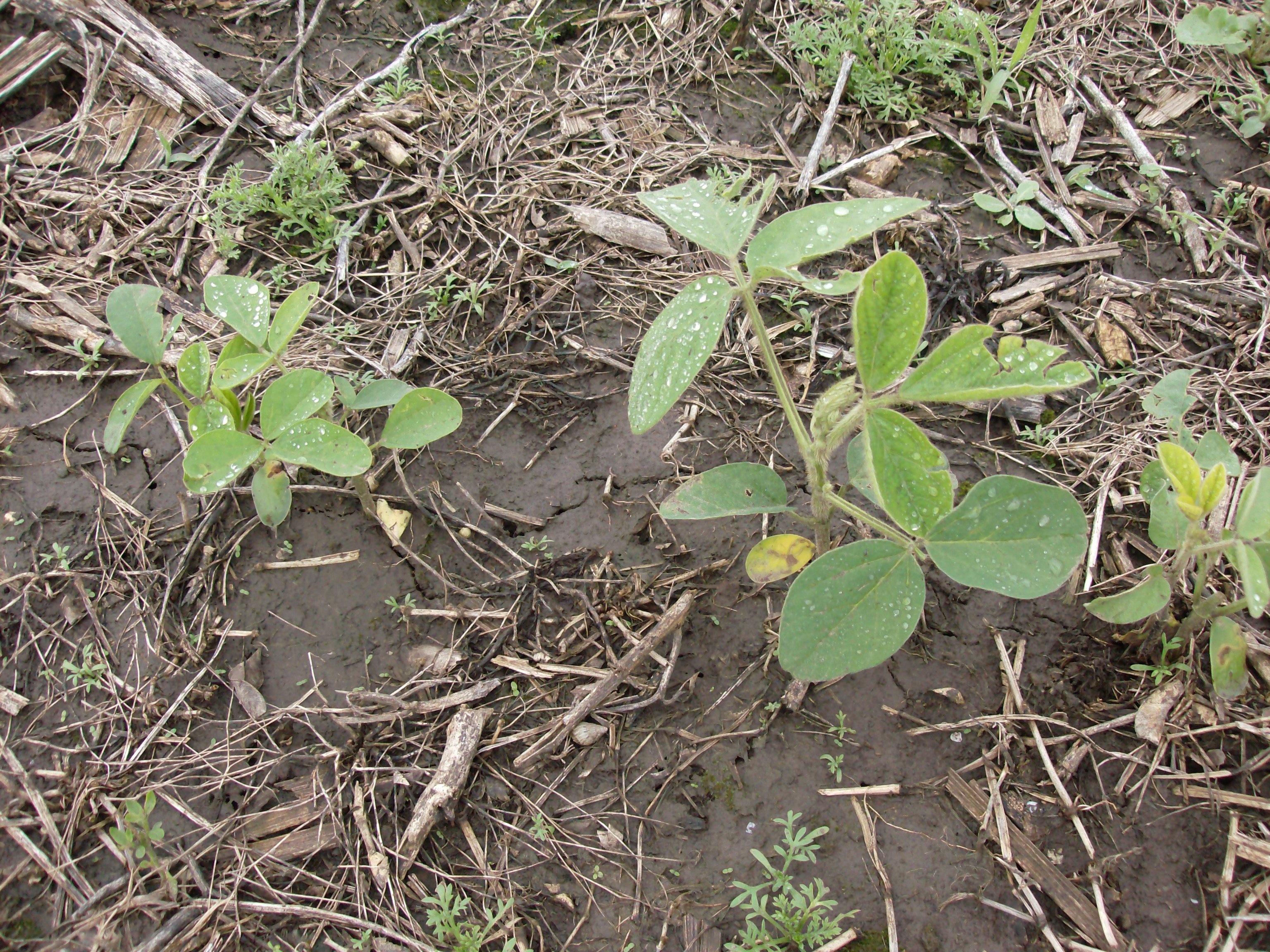
The soybean, soy bean, or soya bean is a species of legume native to East Asia, widely grown for its edible bean. Soy is a staple crop, the world's most grown legume, and an important animal feed.