Development and Application of Prime Editors for the Induction of Site-Specific, Heritable Edits in Soybean [Glycine max (L.) Merr.].
Khadka N, Bui HT, Gupta A, Whitham SA, Yang B
Crispr
Soybeans are in roughly 70% of processed foods you eat, and these new precision editing tools could help breeders develop varieties that grow with less pesticide, tolerate drought better, or produce healthier oils—faster than traditional breeding ever could.
Researchers created a new way to edit the genetic instruction manual of soybean plants with much greater precision than older tools allowed. Think of it like upgrading from correction fluid to a word processor—you can change exactly one letter in a billion-letter document without accidentally messing up surrounding text. The edited changes are stable and get passed on when the plants reproduce, meaning improved traits could be locked in for future crop generations.
Key Findings
Prime editors were successfully developed and demonstrated to work in soybean, a crop where precise gene editing has historically been difficult due to its complex duplicated genome.
The edits made using prime editors were heritable, meaning the genetic changes were stably passed from edited parent plants to their offspring.
Prime editing produced site-specific changes with greater precision than earlier CRISPR-based methods, reducing the risk of unintended edits elsewhere in the genome.
chevron_right Technical Summary
Scientists developed new genetic tools called prime editors that can make precise, targeted changes to soybean DNA—changes that are passed down to future generations of plants. This gives crop breeders a more accurate way to improve soybeans without the off-target errors common with older gene-editing methods.
Species Mentioned
Was this useful?
Want to tell us more? (optional)
Thanks for the note!
Something went wrong — please try again.
Too many submissions. Try again in an hour.
Targeted knockout of a host peroxisomal peptidase confers field resistance to...
The corn in your grocery store and the staple food keeping millions of East African families fed is under serious threat from a viral disease that can wipe o...
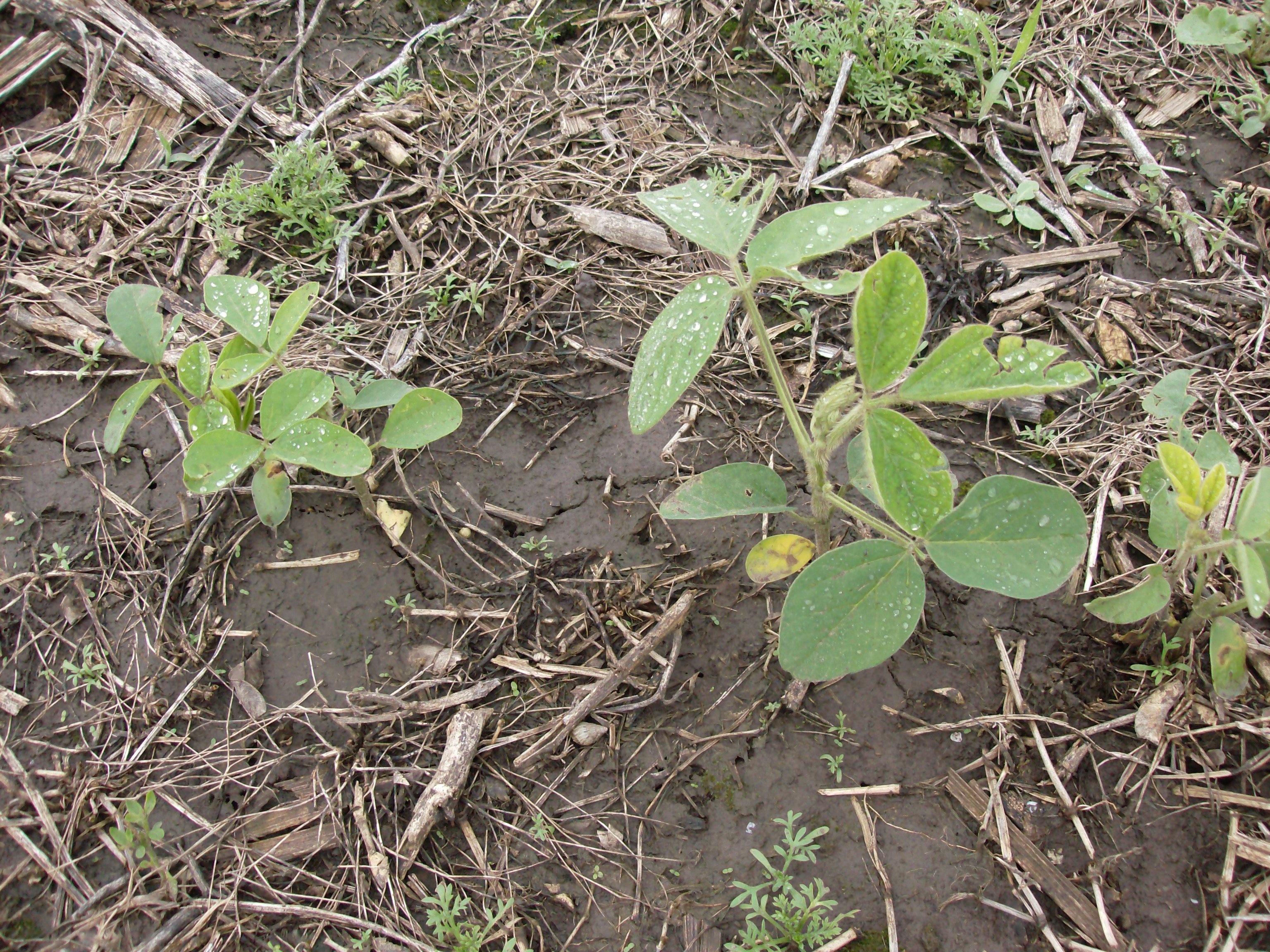
The soybean, soy bean, or soya bean is a species of legume native to East Asia, widely grown for its edible bean. Soy is a staple crop, the world's most grown legume, and an important animal feed.