partridgeberry (Mitchella repens) observed in Riverbend Pkwy, Athens, GA, US
iNaturalist: jmcalpin
Citizen Science
Partridgeberry carpets shaded woodland floors and its bright red berries feed birds and small mammals through winter, so spotting it near a greenway means that corridor may still support the moist, mature forest understory conditions worth protecting.
Someone spotted partridgeberry — a low, creeping plant with small white flowers and red berries — growing along a parkway in Athens, Georgia, and reported it with enough detail to be classified as research-grade. Partridgeberry is a native plant that thrives in shady, moist forests and is often a sign of a relatively healthy woodland understory. This kind of confirmed sighting helps build a picture of where native plants are holding on in and around cities.
Key Findings
A single research-grade observation of partridgeberry (Mitchella repens) was recorded at Riverbend Pkwy, Athens, GA, contributing a verified data point to its known range.
The observation is classified as research-grade, meaning it met iNaturalist's community ID threshold — typically requiring agreement from multiple expert identifiers.
Athens, GA sits within the native range of Mitchella repens (eastern North America), but urban-corridor records help track persistence of woodland understory species amid habitat fragmentation.
chevron_right Technical Summary
A research-grade observation of partridgeberry (Mitchella repens) was recorded at Riverbend Pkwy in Athens, Georgia, confirming the presence of this native evergreen groundcover in an urban or peri-urban corridor of the southeastern US.
Abstract Preview
Research-grade observation of partridgeberry in Riverbend Pkwy, Athens, GA, US.
open_in_new Read full abstractAbstract copyright held by the original publisher.
Species Mentioned
Was this useful?
Want to tell us more? (optional)
Thanks for the note!
Something went wrong — please try again.
Too many submissions. Try again in an hour.
Warming killed underground fungi and pushed meadows toward shrublands
Mountain meadows and wildflower-rich grasslands many people hike through and depend on for clean water and biodiversity are quietly transforming underground ...
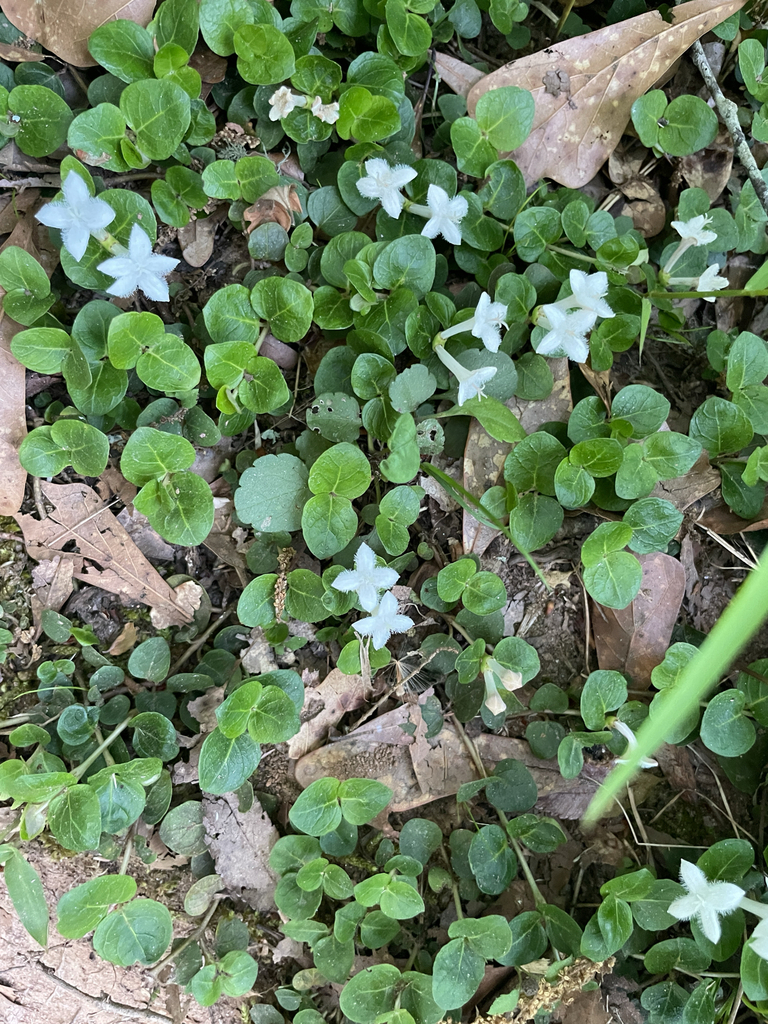
Photo (c) Jessica, taken in Georgia, United States. CC BY via iNaturalist.
Urban ecology is the scientific study of living organisms and their interactions within densely developed environments dominated by buildings, paved surfaces, and human infrastructure. For plant science, this field is essential because it investigates how plants adapt and survive in fragmented
arrow_forward Explore topic