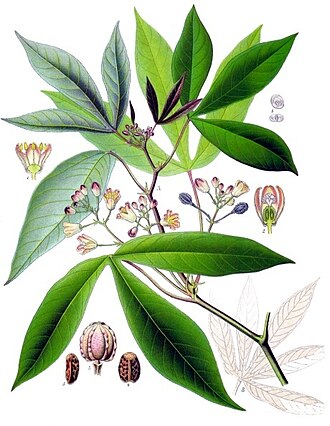
Scientists used camera-equipped drones to measure how cassava plants grow in Nigerian fields over two years, finding that canopy height and volume reliably reflect genetic differences between varieties — making drones a practical tool to speed up cassava breeding.
1
Canopy height and volume showed moderate-to-high heritability (H² = 0.58 and 0.64), meaning genetics strongly controls final plant size — making these traits useful for selecting superior varieties.
2
Repeatability was high for all UAV-derived traits (R = 0.68–0.69), confirming that drone measurements are reliable and consistent across seasons and plot replicates.
3
Relative growth rates had near-zero heritability, indicating they are driven mainly by environmental conditions rather than genetics — useful for studying stress response but not for variety selection.
mail
Weekly plant science — one email, Saturdays.
Check your inbox to confirm — link expires in 24 hours.
Something went wrong — please try again.
Too many signup attempts from your network. Try again in an hour, or email hello@plant.news.