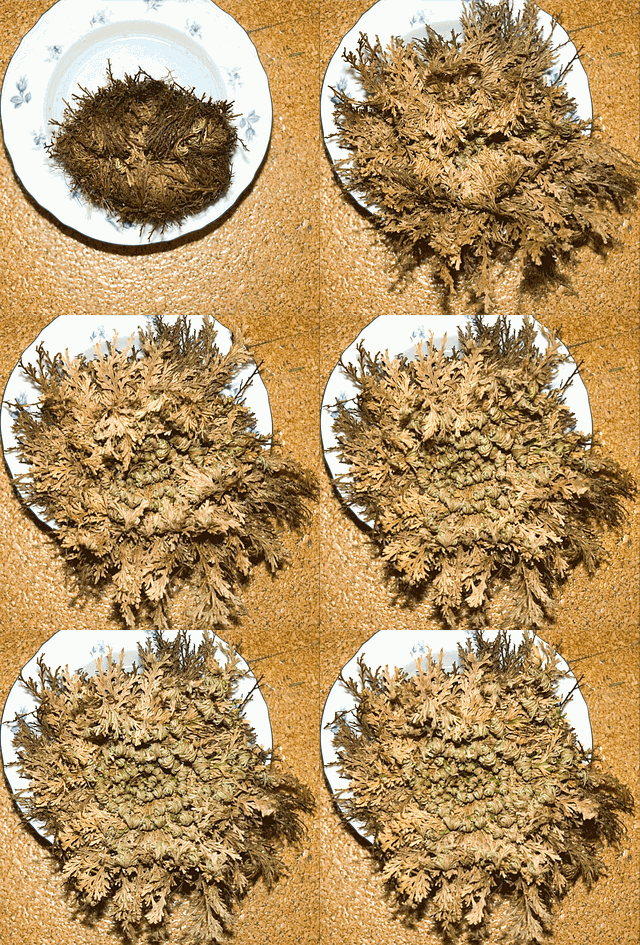
Anti-aging research investigates the biological mechanisms that drive cellular senescence and tissue deterioration over time, with the goal of slowing or reversing these processes. In plant science, this field examines how plants regulate leaf senescence, stress-induced aging, and longevity at the cellular level, offering insights into how organisms can preserve cellular function under adverse conditions. Understanding these mechanisms has broad implications for crop resilience, post-harvest preservation, and uncovering conserved molecular pathways shared across the plant and animal kingdoms.
A compound called amentoflavone, extracted from a drought-hardy plant called the resurrection plant, protects skin cells from UV-B radiation damage by blocking a specific molecular pathway that drives premature skin aging.
1
Amentoflavone (AF) applied at doses of 0.1–0.2 mg/g significantly reduced UVB-induced skin cell aging in both animal and cellular models.
2
AF works by blocking the PAR2-driven PI3K/Akt/FoxO6 signaling pathway, a specific molecular chain reaction that ramps up oxidative stress and accelerates skin aging after UV exposure.
3
The compound is derived from Selaginella tamariscina (the resurrection plant), a natural source with recognized safety, supporting its potential use as a plant-derived photoprotectant.
mail
Weekly plant science — one email, Saturdays.
Check your inbox to confirm — link expires in 24 hours.
Something went wrong — please try again.
Too many signup attempts from your network. Try again in an hour, or email hello@plant.news.