Wildflower times its stink to match fly visitor hours
Valchanova AK, Kakishima S, Sekimoto K, Chang JT, Okuyama Y
Pollinators
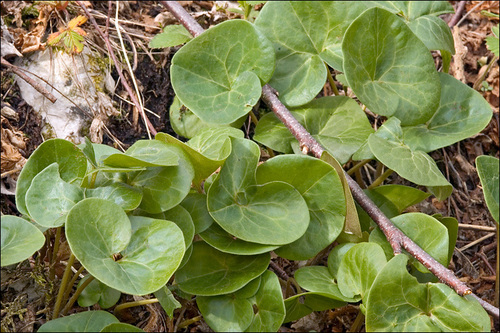
If you've ever wondered why some low-growing woodland flowers smell faintly off, it's not decay in your garden bed, it's the plant running a precisely timed scam on flies that mistake it for a nursery or a meal.
A small Japanese forest plant called Asarum savatieri tricks flies into pollinating it by smelling like rotting meat and spoiled fruit at the same time, flies even lay eggs inside its flowers thinking they've found a good spot. The plant doesn't waste its stink around the clock though, it ramps up the smelly chemicals during the exact daytime hours when its fly visitors are flying around, then dials back when they're gone.
Key Findings
Phorid flies (Megaselia) are the main effective pollinators, and they lay eggs inside the flowers, suggesting the plant mimics an egg-laying site
Floral scent combines carrion-like compounds (e.g., dimethyl disulphide) with rotting-fruit-like alcohols, aldehydes and ketones, pointing to a mixed decomposition mimicry strategy
Real-time mass spectrometry showed peak volatile emission occurs exclusively during daytime, tightly synchronized with when dipteran pollinators are actively visiting
chevron_right Technical Summary
A rare Japanese wildflower lures flies to lay eggs inside its blooms by faking the smell of rotting meat and fruit, releasing those odors only during the exact daylight hours its fly pollinators are active.
Abstract Preview
Original paper
Synchrony of floral volatile emission with diurnal pollinators of possible decomposition mimic Asarum savatieri (Aristolochiaceae).
Floral scent is crucial for mediating plant-pollinator interactions, a primary driver of angiosperm diversity. The dynamic nature of olfactory cues means they can be fine-tuned to suit pollinator a...
open_in_new Read full abstractAbstract copyright held by the original publisher.
Species Mentioned
Was this useful?
Want to tell us more? (optional)
Thanks for the note!
Something went wrong — please try again.
Too many submissions. Try again in an hour.
Nanoplastics interfere with plant-mycorrhizal communication and limit plant growth.
Microplastics breaking down in your garden soil are quietly strangling the beneficial fungi that help your vegetables absorb phosphorus and other nutrients, ...
Plant signaling encompasses the molecular and cellular mechanisms by which plants perceive and respond to environmental changes, hormonal signals, and stress conditions. These signaling pathways regulate fundamental biological processes including growth, development, nutrient acquisition, and
arrow_forward Explore topic