Microbe duo recruits helpful soil allies to supercharge sorghum
Pant B, Khan M, Kabir AH
Soil Health
If you've ever wondered why the same fertilizer or seed treatment works great in one garden bed and flops in another, this research shows the answer may live in which neighboring soil microbes are already there to welcome your inoculant.
Researchers paired a helpful bacterium (Bacillus subtilis) with a helpful fungus (Trichoderma) and applied them together to sorghum roots. The combo grew bigger, healthier plants than either microbe alone, but only when natural soil microbes were present, suggesting the pair works by recruiting a supportive crew of other soil organisms rather than helping the plant directly. When the soil was sterilized, the growth boost disappeared, pointing to teamwork among many microbes as the real secret.
Key Findings
The Bacillus subtilis-Trichoderma afroharzianum consortium produced the highest composite plant performance index and shoot fresh weight compared to single-microbe treatments or controls.
Co-inoculation only worked in natural soil, not sterile soil, indicating the benefit depends on enrichment of native microbes like Actinoplanes, Enterobacter, and Podospora rather than direct action by the inoculants alone.
Split-root experiments showed that applying both microbes to both sides of the root system (bilateral co-inoculation) produced the greatest whole-plant growth response, alongside increased carbon levels and siderophore production linked to improved nutrient status.
chevron_right Technical Summary
Scientists found that pairing two beneficial microbes, a bacterium and a fungus, on sorghum roots boosted plant growth more than either microbe alone, likely by recruiting a helpful community of other soil microbes rather than acting directly on the plant.
Abstract Preview
Original paper
Localized co-inoculation of compatible Bacillus subtilis and Trichoderma afroharzianum is associated with shifts in the root microbiome and improves plant performance in sorghum.
Although bacterial-fungal consortia have been investigated for plant growth promotion, their effects on sorghum performance and associated root microbial taxa remain less characterized. Here, we in...
open_in_new Read full abstractAbstract copyright held by the original publisher.
Species Mentioned
Was this useful?
Want to tell us more? (optional)
Thanks for the note!
Something went wrong — please try again.
Too many submissions. Try again in an hour.
Targeted knockout of a host peroxisomal peptidase confers field resistance to...
The corn in your grocery store and the staple food keeping millions of East African families fed is under serious threat from a viral disease that can wipe o...
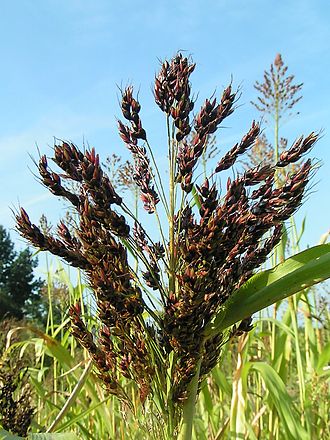
Sorghum bicolor, commonly called sorghum and also known as broomcorn, great millet, Indian millet, Guinea corn, jowar, or milo, is a species in the grass genus Sorghum. It is typically an annual, but some cultivars are perennial. It grows in clumps that may reach over 4 metres (13 ft) high. The g...