Rare dune plant's Irish population too genetically uniform to safely rescue
Native Plants
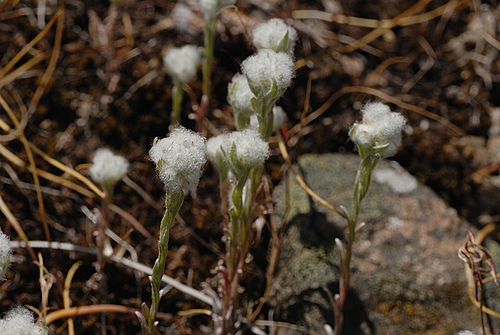
If you walk coastal dunes anywhere from Ireland to the Mediterranean, this low, cottony-leaved plant you might barely notice is quietly vanishing, and its last northern outpost is so genetically thin that a single bad storm or disease could wipe it out for good.
Cottonweed is a small plant that only grows on coastal sand dunes, and its northernmost population in Ireland is in serious trouble. Researchers checked the plant's genetic diversity across its whole range and found the Irish dunes population has essentially no genetic variation at all, meaning any rescue plan (like bringing in new plants) needs real caution. Oddly, future climate models suggest Ireland's dunes will actually become a better home for the plant even as its Mediterranean populations are expected to shrink.
Key Findings
Achillea maritima shows low genetic diversity overall, with zero diversity detected in populations along the Atlantic coast, including Ireland's critically endangered population
Species distribution models predict increasing climatic suitability in northern latitudes, with Ireland becoming more favorable for the species under future climate scenarios
Eastern Mediterranean populations are projected to face a clear decline in climatic suitability, signaling an urgent need for conservation action there
chevron_right Technical Summary
Scientists studying cottonweed, a rare coastal dune plant, found that Ireland's population (the species' northern edge) has almost no genetic diversity, putting it at high risk of extinction, while climate models show Ireland becoming more hospitable to the plant even as Mediterranean populations decline.
Abstract Preview
Original paper
A phylogeographic analysis of Achillea maritima (cottonweed), with an assessment of the impacts of future climate change on distributions across the species range
Coastal ecosystems and the flora which characterize these ecosystems are experiencing mounting pressure from the impacts of climate change and anthropogenic activities. Achillea maritima is an obli...
open_in_new Read full abstractAbstract copyright held by the original publisher.
Species Mentioned
Was this useful?
Want to tell us more? (optional)
Thanks for the note!
Something went wrong — please try again.
Too many submissions. Try again in an hour.
Nanoplastics interfere with plant-mycorrhizal communication and limit plant growth.
Microplastics breaking down in your garden soil are quietly strangling the beneficial fungi that help your vegetables absorb phosphorus and other nutrients, ...
Climate adaptation in plants refers to the physiological and evolutionary mechanisms through which plants adjust to changing environmental conditions, including temperature shifts, altered precipitation patterns, and seasonal variations. Understanding these processes is essential for plant science
arrow_forward Explore topic