Flowers without tubes still sort pollen for cross-pollination
He X, Barrett SCH, Tong ZY, Peng Y, Wu LY.
Pollinators
Next time you spot a simple, open flower buzzing with flies or small insects, know that its shape and the pollinator's body are working together like a lock and key, placing pollen exactly where it needs to go without any fancy tube to guide it.
Some flowers have two forms with sex parts at different heights, and they rely on pollinators to carry pollen specifically between matching heights so they don't just pollinate themselves. Scientists studying a flat, bowl-shaped flower called Persicaria jucunda found that even without a tube to direct things, the fly pollinators' body shape matched up so well with the flower's parts that pollen landed on different fly body parts depending on which flower form it came from. That precise placement meant pollen mostly moved between the two different flower types rather than within the same type, solving a mystery about how open flowers manage this trick.
Key Findings
Fly proboscis length matched the position of lower-level sex organs, while the fly's head matched upper-level organs, creating a precise morphological fit.
L-morph pollen landed overwhelmingly on fly proboscides (76.6%), while S-morph pollen landed mainly on fly heads (85.7%).
This body-part segregation led to significantly higher rates of pollen transfer between flower morphs than within the same morph, despite the species lacking a floral tube.
chevron_right Technical Summary
A tube-less, bowl-shaped flower pollinated by flies still manages to sort pollen onto different body parts of its pollinators, ensuring it mostly reaches the right type of flower rather than its own. This solves a long-standing puzzle about how plants without floral tubes can pull off Darwin's cross-pollination trick.
Abstract Preview
Original paper
Morphological fit promotes pollen segregation and disassortative pollination in an open-flowered, nontubular heterostylous species.
Heterostyly is a classic Darwinian adaptation promoting disassortative pollination. The polymorphism usually depends on floral tubes to enforce spatial segregation of pollen deposited on pollinator...
open_in_new Read full abstractAbstract copyright held by the original publisher.
Species Mentioned
Was this useful?
Want to tell us more? (optional)
Thanks for the note!
Something went wrong — please try again.
Too many submissions. Try again in an hour.
Nanoplastics interfere with plant-mycorrhizal communication and limit plant growth.
Microplastics breaking down in your garden soil are quietly strangling the beneficial fungi that help your vegetables absorb phosphorus and other nutrients, ...
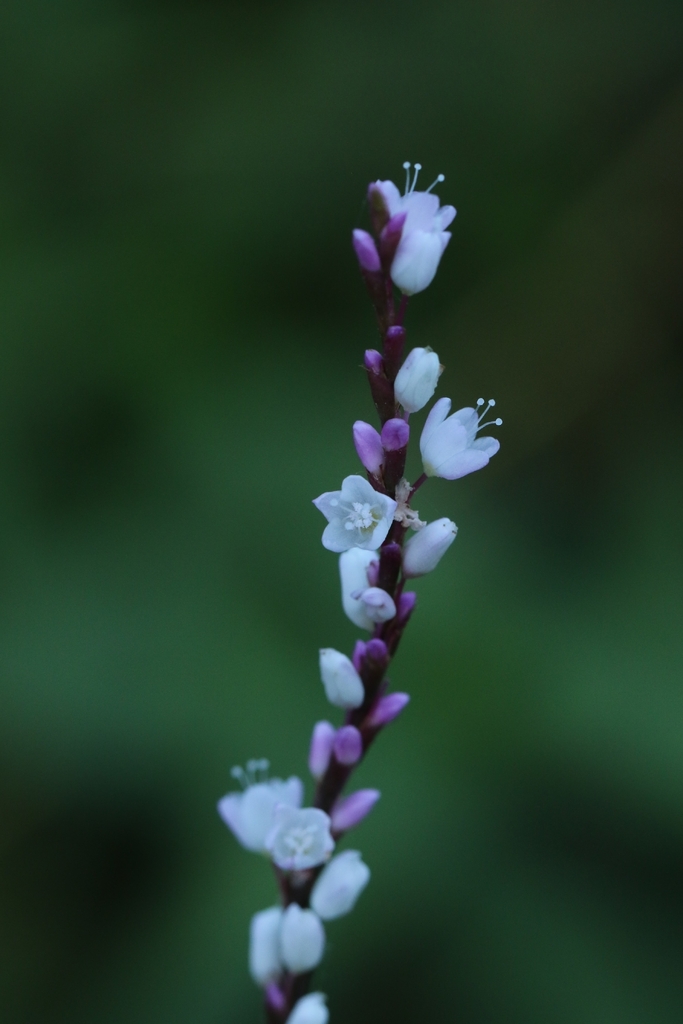
Photo by Agnes Trekker, taken in Tai Po, Hong Kong. CC0 via iNaturalist.
Plant signaling encompasses the molecular and cellular mechanisms by which plants perceive and respond to environmental changes, hormonal signals, and stress conditions. These signaling pathways regulate fundamental biological processes including growth, development, nutrient acquisition, and
arrow_forward Explore topic