Wild lettuce evolved to flower a week earlier in 44 years
Van Deurs S, Fior S, Singer A, Mayzlish-Gati E, Alexander JM
Climate Adaptation
If a weedy wild lettuce can genetically shift its flowering time within decades, the drought-stressed plants in your own garden beds may be doing the same thing right now, just too slowly for many species to keep up.
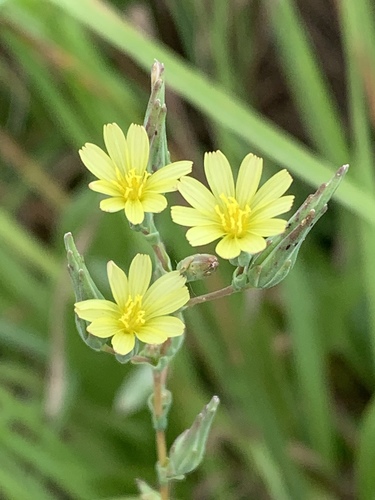
Researchers grew seeds from a wild lettuce relative that had been collected and stored 44 years apart from the same locations in Israel, planting old and new generations side by side today. The modern plants flowered over a week earlier than their ancestors, and that same early-flowering pattern showed up when today's plants were deliberately stressed with drought, suggesting real genetic adaptation to a warmer, drier climate rather than just plants reacting to weather in the moment. Oddly, plants originally from wetter sites flowered earlier than ones from drier sites, the opposite of what scientists expected, showing that predicting how plants will evolve under climate change is trickier than it looks.
Key Findings
Contemporary Lactuca serriola plants flowered more than 7 days earlier than plants grown from seeds collected 44 years earlier, from the same Israeli and Golan Heights populations.
Experimental drought treatment independently caused earlier flowering, supporting the idea that earlier flowering is an adaptive response to warmer, drier conditions.
Plants originating from wetter source populations flowered earlier than those from drier populations, contradicting space-for-time predictions and showing a mismatch between spatial and temporal climate responses.
chevron_right Technical Summary
Scientists compared wild lettuce plants collected 44 years apart in Israel and found the modern ones flower a week earlier, direct evidence that plants are genetically evolving in real time to keep pace with a hotter, drier climate.
Abstract Preview
Original paper
Evolution of flowering phenology over 44 years of climate change.
Evolution is expected to be crucial for the persistence of some populations exposed to changing climate, but demonstrations of rapid evolution in wild populations associated with ongoing climate ch...
open_in_new Read full abstractAbstract copyright held by the original publisher.
Species Mentioned
Was this useful?
Want to tell us more? (optional)
Thanks for the note!
Something went wrong — please try again.
Too many submissions. Try again in an hour.
Temperature regulation in plants: From molecular mechanisms to climate-resili...
The wheat in your bread and the vegetables in your garden depend on precise temperature cues to know when to flower and set seed — and scientists decoding ex...
Phenology is the study of recurring biological events in plant life cycles—such as flowering, fruiting, and germination—and how these events are timed in response to seasonal and climatic conditions. This research is essential to plant science because phenological patterns directly influence
arrow_forward Explore topic