Wild carrot spotted growing in Portland confirmed by naturalists
iNaturalist: peterson_em
Urban Ecology
That lacy white flower head you've seen along Portland sidewalks and vacant lots is Queen Anne's lace, the wild ancestor of the carrots in your garden bed, and every confirmed sighting helps track where it's spreading.
Someone in Portland spotted a wild carrot plant, the same species your garden carrots come from originally, and other plant watchers online agreed on the identification, making it an official verified record. It's a small piece of a much bigger puzzle showing where this common roadside plant is popping up across cities.
Key Findings
Observation was classified as 'research-grade' on iNaturalist, meaning the identification was confirmed by multiple community reviewers.
Wild carrot (Daucus carota) is documented growing within the Portland, OR urban area.
The sighting contributes to a citizen-science database used to track the plant's geographic distribution over time.
chevron_right Technical Summary
A community member confirmed a sighting of wild carrot growing in Portland, Oregon, and the observation was verified by other naturalists as research-grade, adding a data point to public records tracking where this plant grows.
Abstract Preview
Original paper
wild carrot (Daucus carota) observed in Portland, OR, US
Research-grade observation of wild carrot in Portland, OR, US.
open_in_new Read full abstractAbstract copyright held by the original publisher.
Species Mentioned

Was this useful?
Want to tell us more? (optional)
Thanks for the note!
Something went wrong — please try again.
Too many submissions. Try again in an hour.
Warming killed underground fungi and pushed meadows toward shrublands
Mountain meadows and wildflower-rich grasslands many people hike through and depend on for clean water and biodiversity are quietly transforming underground ...
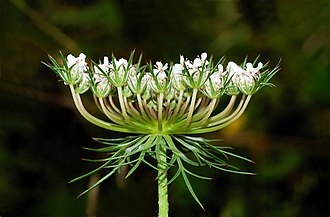
Daucus carota, whose common names include wild carrot, European wild carrot, bird's nest, bishop's lace, carrot flower, and Queen Anne's lace, is a flowering plant in the family Apiaceae. It is native to temperate regions of the Old World with a number of regional subspecies, and is naturalised w...