Rare petal-less sunflower relative spotted growing in Oregon county
iNaturalist: conquest1
Native Plants
Spotting an uncommon native like this one helps map where drought-tolerant regional wildflowers still thrive, which is exactly the kind of data that guides which plants belong in a native pollinator garden nearby.
Someone out exploring in Marion County, Oregon found and photographed a plant called the Rayless False Goldenaster, a wildflower cousin of the sunflower that skips the showy yellow petals most of its relatives have. Other naturalists reviewed the photos and confirmed the identification, making it an official 'research-grade' record. Every verified sighting like this adds a data point to maps scientists and land managers use to track where native plants actually grow.
Key Findings
Observation achieved 'research-grade' status on iNaturalist after community identification review
Species identified: Heterotheca oregona (Rayless False Goldenaster), a member of the aster/sunflower family lacking ray florets
Location documented: Marion County, Oregon, USA
chevron_right Technical Summary
A citizen scientist confirmed a research-grade sighting of the Rayless False Goldenaster, an uncommon sunflower relative that lacks the typical yellow petal-like rays, growing in Marion County, Oregon.
Abstract Preview
Original paper
Rayless False Goldenaster (Heterotheca oregona) observed in Marion County, OR, USA
Research-grade observation of Rayless False Goldenaster in Marion County, OR, USA.
open_in_new Read full abstractAbstract copyright held by the original publisher.
Species Mentioned
Was this useful?
Want to tell us more? (optional)
Thanks for the note!
Something went wrong — please try again.
Too many submissions. Try again in an hour.
Warming killed underground fungi and pushed meadows toward shrublands
Mountain meadows and wildflower-rich grasslands many people hike through and depend on for clean water and biodiversity are quietly transforming underground ...
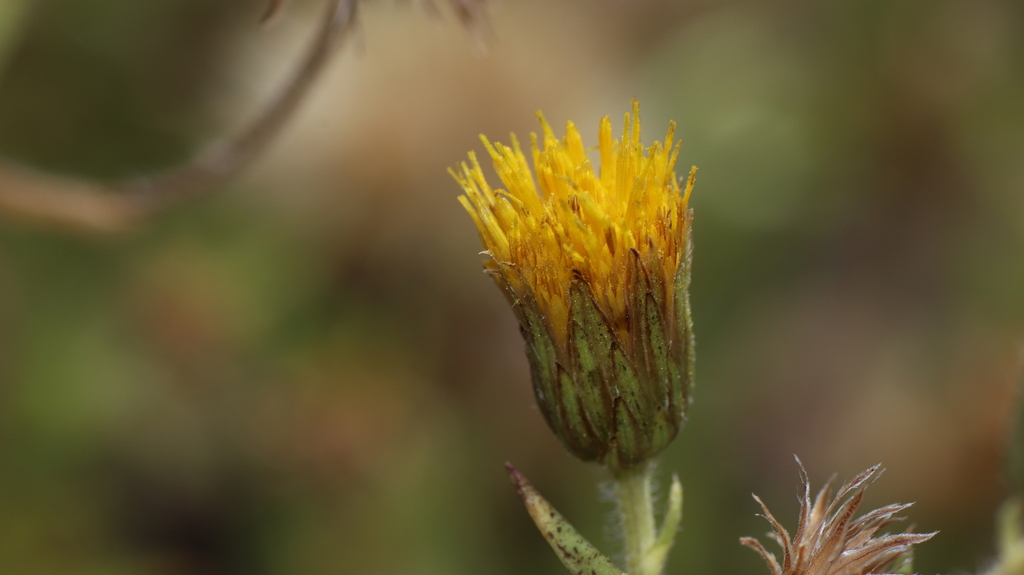
Photo (c) Conquest, taken in Oregon, United States. CC BY via iNaturalist.
Urban ecology is the scientific study of living organisms and their interactions within densely developed environments dominated by buildings, paved surfaces, and human infrastructure. For plant science, this field is essential because it investigates how plants adapt and survive in fragmented
arrow_forward Explore topic