Spiky native cactus spotted and confirmed in West Texas park
iNaturalist: marlo_lawrence
Native Plants
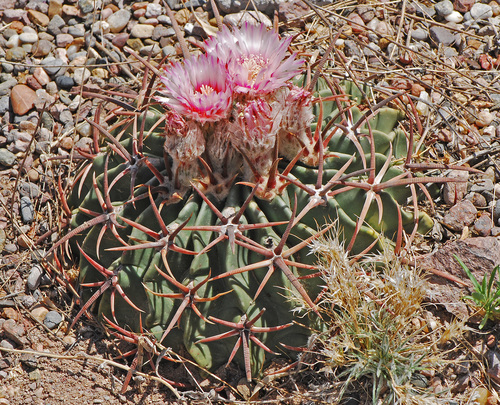
If you're hiking dry, rocky trails in West Texas, this low-growing cactus hides flush with the soil and its name is a literal warning about the hooked spines waiting underfoot.
Someone out at Balmorhea State Park in Texas photographed a Horse Crippler Cactus and logged it on iNaturalist, where other experts checked the ID and confirmed it. This little cactus grows almost flat against the ground with thick, hooked spines, which is exactly how it earned its rough nickname. Sightings like this help track where the species is still holding on across its native range.
Key Findings
Observation reached 'research-grade' status on iNaturalist, meaning the species ID was confirmed by community consensus
Location documented: Balmorhea State Park, Balmorhea, TX, US
Species observed: Horse Crippler Cactus (Homalocephala texensis), a low-growing native cactus of Texas drylands
chevron_right Technical Summary
A citizen scientist confirmed a research-grade sighting of the Horse Crippler Cactus at Balmorhea State Park in West Texas, adding to public data on where this spiny native cactus still grows.
Abstract Preview
Original paper
Horse Crippler Cactus (Homalocephala texensis) observed in Balmorhea State Park, Balmorhea, TX, US
Research-grade observation of Horse Crippler Cactus in Balmorhea State Park, Balmorhea, TX, US.
open_in_new Read full abstractAbstract copyright held by the original publisher.
Species Mentioned
Was this useful?
Want to tell us more? (optional)
Thanks for the note!
Something went wrong — please try again.
Too many submissions. Try again in an hour.
Warming killed underground fungi and pushed meadows toward shrublands
Mountain meadows and wildflower-rich grasslands many people hike through and depend on for clean water and biodiversity are quietly transforming underground ...
Urban ecology is the scientific study of living organisms and their interactions within densely developed environments dominated by buildings, paved surfaces, and human infrastructure. For plant science, this field is essential because it investigates how plants adapt and survive in fragmented
arrow_forward Explore topic