Moss patches send electrical signals across themselves for days
Plant Signaling
That soft green cushion growing on a shady rock or old log in your yard isn't just sitting there; it's electrically active around the clock, quietly processing its environment like a low-power living sensor.
Researchers hooked up electrodes to a common moss called Brachythecium rutabulum and let them record for days without a break. They found the moss produces fast electrical spikes, slower rhythmic pulses, and very slow waves all at once, and these signals travel across the moss cushion in an organized, timed pattern rather than staying put. It suggests moss can coordinate information across its whole body, which is exciting for scientists dreaming up living sensors and computers made from plants instead of silicon.
Key Findings
First multi-day, centimetre-scale recording of natural electrical activity in the moss Brachythecium rutabulum revealed three nested timescales: fast oscillatory spikes, slower rhythmic fluctuations, and very slow depolarization waves.
Electrical signals propagate across the moss cushion between multiple electrode sites with clearly ordered temporal delays, rather than staying localized.
The moss showed gradual baseline shifts and extended periods of increased or decreased excitability, indicating persistent temporal structure over long durations.
chevron_right Technical Summary
Scientists recorded electrical activity in moss for multiple days straight and found it behaves like a coordinated, living circuit, sending signals across the whole moss patch on fast and slow timescales at once.
Abstract Preview
Original paper
Multi-scale electrical activity and signal propagation in the moss <i>Brachythecium rutabulum</i>
Abstract Plants and bryophytes display diverse forms of electrical activity, yet the organization of endogenous signals in mosses has received little attention. In this work, we present a long, uni...
open_in_new Read full abstractAbstract copyright held by the original publisher.
Species Mentioned
Was this useful?
Want to tell us more? (optional)
Thanks for the note!
Something went wrong — please try again.
Too many submissions. Try again in an hour.
Nanoplastics interfere with plant-mycorrhizal communication and limit plant growth.
Microplastics breaking down in your garden soil are quietly strangling the beneficial fungi that help your vegetables absorb phosphorus and other nutrients, ...
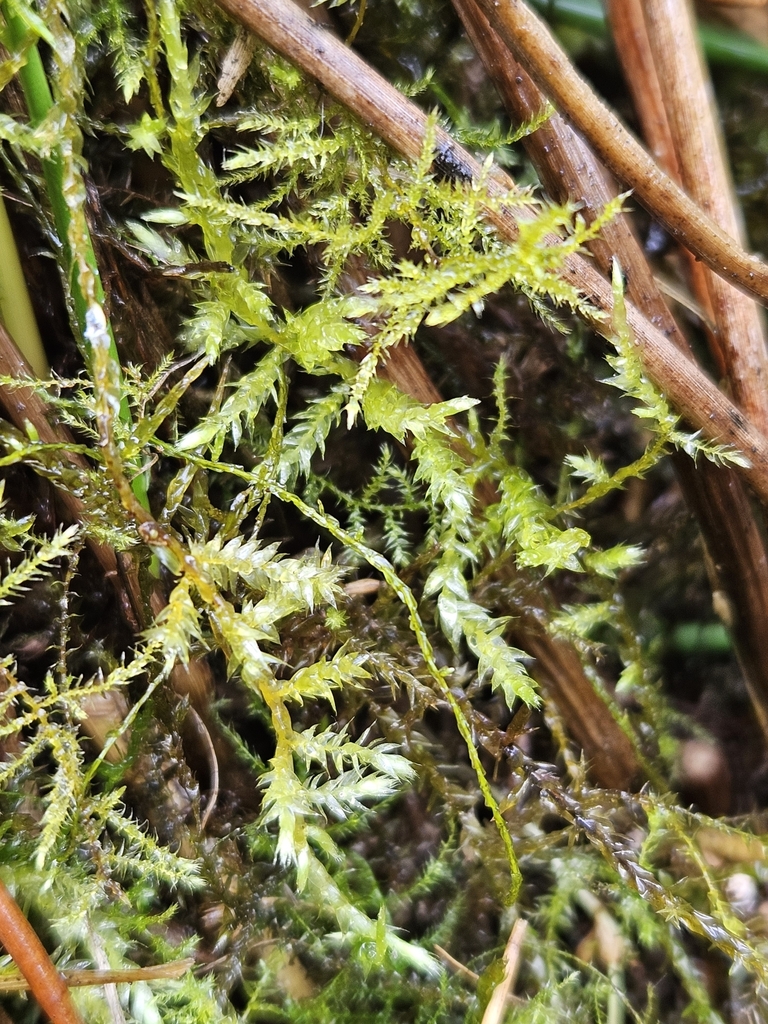
Photo (c) Helen Waterman, taken in England, United Kingdom. CC BY via iNaturalist.
Urban ecology is the scientific study of living organisms and their interactions within densely developed environments dominated by buildings, paved surfaces, and human infrastructure. For plant science, this field is essential because it investigates how plants adapt and survive in fragmented
arrow_forward Explore topic