A non-working root partner still helps alders survive copper pollution
Phytoremediation
The alder trees lining creek banks and reclaimed mine sites near you may owe their toughness to a root partner that doesn't even do its main job, hinting at hidden backup systems in soil microbes that could help restore contaminated ground.
Alder trees normally team up with soil bacteria that live in their roots and turn air nitrogen into plant food. This study looked at a strange version of that bacteria, one that moves into the roots and builds the same nodule structures but skips the nitrogen-fixing step entirely. Even without doing its usual job, it still made young alder trees more resilient when the soil had too much copper in it, suggesting the partnership offers more benefits than scientists thought.
Key Findings
Pseudofrankia inefficax EuI1c forms root nodules on Alnus glutinosa (black alder) but is Nod+/Fix-, meaning it colonizes roots without providing nitrogen fixation.
Seedlings hosting this atypical symbiont showed improved tolerance to copper-contaminated soil compared to non-colonized plants.
The findings suggest root nodule symbionts can benefit host trees through mechanisms beyond nitrogen fixation, such as helping manage heavy metal stress.
chevron_right Technical Summary
Scientists found that a nitrogen-fixing bacterium's odd cousin, one that forms root nodules on alder trees but doesn't actually fix nitrogen, still helps the trees cope with toxic copper levels in the soil.
Species Mentioned
Was this useful?
Want to tell us more? (optional)
Thanks for the note!
Something went wrong — please try again.
Too many submissions. Try again in an hour.
Nanoplastics interfere with plant-mycorrhizal communication and limit plant growth.
Microplastics breaking down in your garden soil are quietly strangling the beneficial fungi that help your vegetables absorb phosphorus and other nutrients, ...
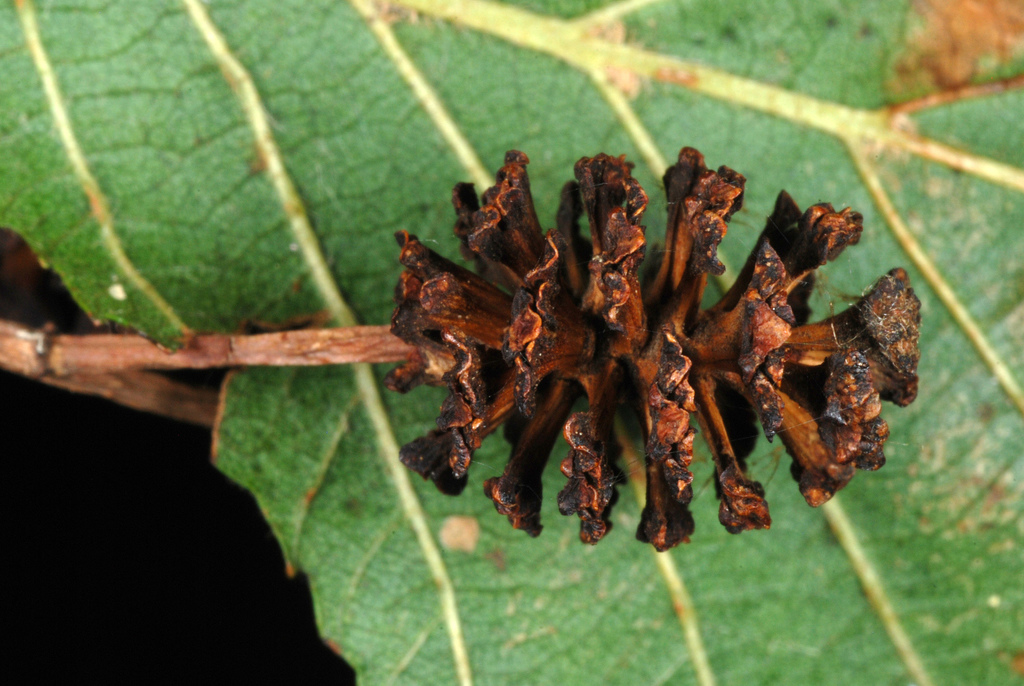
Photo (c) Douglas Goldman, taken in New York, United States. CC BY-SA via iNaturalist.
Soil health is the capacity of soil to function as a living ecosystem, supporting complex interactions between microorganisms, soil fauna, and plant communities. For plant science, soil health is critical because these biological and chemical soil properties directly control nutrient availability,
arrow_forward Explore topic