Rarest ginger flower color isn't the reproductive winner, common one is
Shrotri S, Gowda V.
Pollinators
If you've ever assumed the showiest flower in your garden must be the most successful at reproducing, this ginger relative proves that's not always true, the plain green-red morph outcompetes its flashier rivals by being compatible with more mates, not by attracting more moths.
Scientists studying a nocturnal ginger plant called Curcuma caulina in India found it comes in three different bract colors, kind of like different flower color varieties you'd see in a garden center. The rare, showy red-white morph offers sweeter nectar and gets visited by hawkmoths more often, but it struggles to make seeds because it needs a different plant to breed with and there aren't many partners around. Meanwhile the common, plainer green-red morph makes the most seeds and fruit, proving that being popular with pollinators isn't the whole story when it comes to reproductive success.
Key Findings
Three bract color morphs of Curcuma caulina show no difference in overall plant or flower shape, only in color and how common each morph is in the population
The common green-red morph has low-energy nectar and fewer pollinator visits but is self-incompatible, yet achieves the highest female reproductive success (fruit and seed set)
The rare red-white morph has high-energy nectar and more hawkmoth visits with leaky self-compatibility, but still shows lower reproductive success, likely due to scarcity of compatible mates
chevron_right Technical Summary
A wild ginger plant in India comes in three bract colors, and surprisingly the least flashy, hardest-to-visit morph actually produces the most seeds, showing that popularity with pollinators isn't the only path to reproductive success.
Abstract Preview
Original paper
A tale of three morphs: nectar, reproductive compatibility, and morph abundance explain reproductive success within a polymorphic ginger from Western Ghats, India.
Although floral colour polymorphism is common in angiosperms, the functional nature of polymorphic traits within a species remains poorly understood. Colour morphs may differ in traits other than c...
open_in_new Read full abstractAbstract copyright held by the original publisher.
Species Mentioned
Was this useful?
Want to tell us more? (optional)
Thanks for the note!
Something went wrong — please try again.
Too many submissions. Try again in an hour.
Nanoplastics interfere with plant-mycorrhizal communication and limit plant growth.
Microplastics breaking down in your garden soil are quietly strangling the beneficial fungi that help your vegetables absorb phosphorus and other nutrients, ...
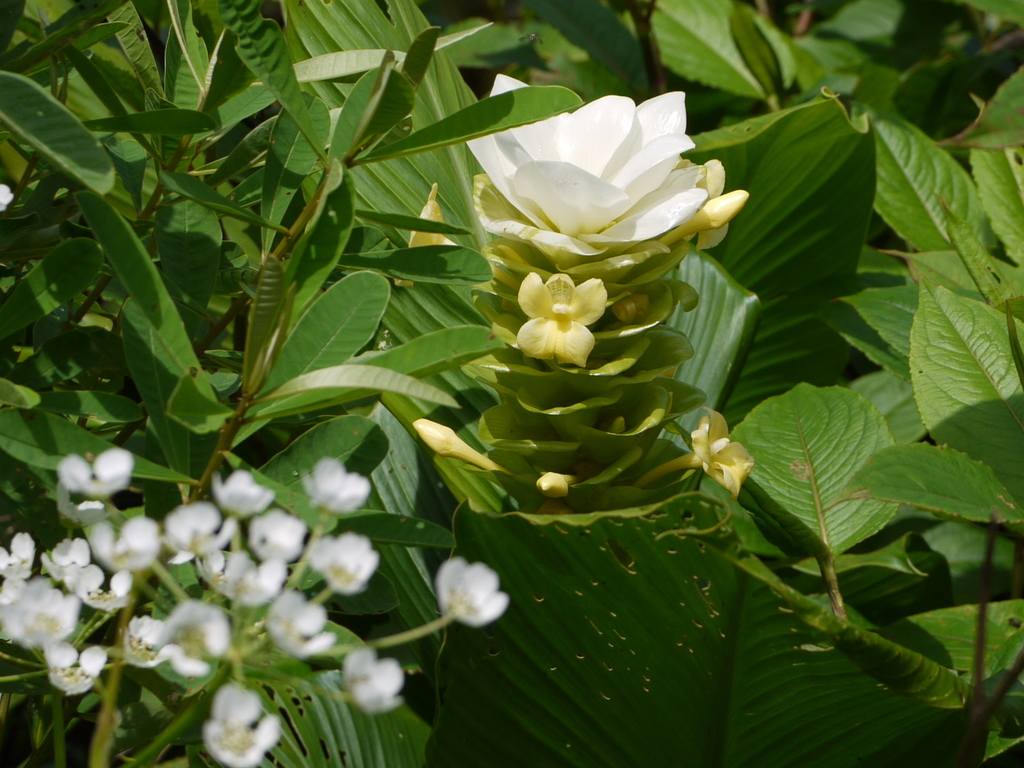
Photo (c) Dinesh Valke. CC BY-SA via iNaturalist.
Plant signaling encompasses the molecular and cellular mechanisms by which plants perceive and respond to environmental changes, hormonal signals, and stress conditions. These signaling pathways regulate fundamental biological processes including growth, development, nutrient acquisition, and
arrow_forward Explore topic