Clay coating helps native tree seedlings survive harsh sun during reforestation
da Silva ALPM, de Miranda RMDSN, de Souza GAR, de Andrade Neves D, de Souza Barcellos LC
Native Plants
If you've ever tried to establish a native tree seedling in a bare, sunny patch of yard only to watch it scorch and stall, this technique offers a practical, low-cost shield that buys the plant time to root before the canopy closes.
Researchers painted seedlings of two native Brazilian trees with a thin film made from kaolin, a white clay mineral, then grew them in full direct sunlight. The coating acted like sunscreen, lowering leaf temperatures and keeping the tiny energy-producing structures inside the cells intact. The seedlings grew better and showed less damage than uncoated plants left in the same harsh conditions, suggesting this simple treatment could help reforestation projects succeed in degraded, open landscapes.
Key Findings
Kaolin particle film lowered leaf temperatures and preserved chloroplast and mitochondrial ultrastructure under full sunlight in both species.
Cordia superba showed stronger growth responses to the treatment, while Citharexylum myrianthum displayed greater baseline tolerance to high light stress.
Treated seedlings accumulated more starch grains and plastoglobules, indicating improved energy metabolism and cellular integrity under high irradiance.
chevron_right Technical Summary
Coating seedlings of two native Atlantic Forest trees with a kaolin-based particle film significantly reduced heat and light stress, preserving cell structures critical for photosynthesis and supporting healthier growth in full-sun restoration sites.
Abstract Preview
Original paper
Kaolin-based particle film mitigates high light stress in native tree seedlings through anatomical and growth adjustments.
Deforestation and environmental degradation increase the need for effective strategies to improve seedling establishment in ecological restoration programs, particularly under high irradiance condi...
open_in_new Read full abstractAbstract copyright held by the original publisher.
Species Mentioned
Was this useful?
Want to tell us more? (optional)
Thanks for the note!
Something went wrong — please try again.
Too many submissions. Try again in an hour.
Temperature regulation in plants: From molecular mechanisms to climate-resili...
The wheat in your bread and the vegetables in your garden depend on precise temperature cues to know when to flower and set seed — and scientists decoding ex...
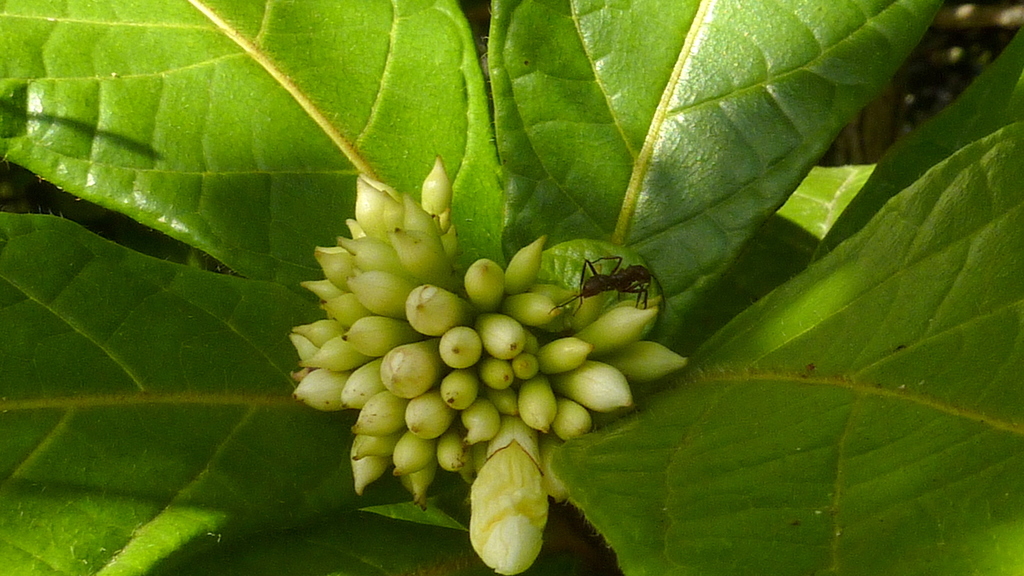
Photo (c) Alex Popovkin, taken in Bahia, Brazil. CC BY via iNaturalist.
Climate adaptation in plants refers to the physiological and evolutionary mechanisms through which plants adjust to changing environmental conditions, including temperature shifts, altered precipitation patterns, and seasonal variations. Understanding these processes is essential for plant science
arrow_forward Explore topic