Land plants' algal relatives evolved complexity in surprising loops, not a straight line
Darienko T, Kunz CF, Goldbecker ES, Endriulaitytė E, Bierenbroodspot MJ
Plant Evolution
Every moss cushion on a shaded rock and every fern unfurling in spring is the product of evolutionary experiments that started in ancient algae, and understanding those experiments helps explain why plants build bodies the way they do.
Scientists studying the ancient relatives of land plants found that multicellularity, the ability to grow as a complex organism with many coordinated cells, didn't evolve once and then steadily improve. Different lineages of green algae gained and lost complexity multiple times across a billion years of history. Surprisingly, the algae most closely related to land plants today are actually among the simpler ones, suggesting the ancestors of our trees and flowers went through a phase of 'un-complexifying' before giving rise to the most elaborate plant bodies on Earth.
Key Findings
Streptophyte algae evolved multicellularity early, then experienced multiple independent losses and reductions across lineages rather than a single progressive gain.
Zygnematophyte algae, the closest living relatives of land plants, show dramatic reductions to unicellular or filamentous forms despite retaining the genetic toolkit associated with complex multicellular traits.
Regulatory rewiring of protein-protein interaction networks, driven by intrinsically disordered protein regions and short linear motifs, is proposed as a key driver of repeated evolutionary innovation in plant body plans.
chevron_right Technical Summary
A new analysis of plant evolutionary history shows that multicellularity in land plants' ancestors didn't follow a straight line from simple to complex. Instead, algal relatives of land plants repeatedly gained, lost, and regained complex body forms over a billion years, with the closest living algal relatives of land plants actually being simpler than their ancestors.
Abstract Preview
Original paper
The evolutionary origins of streptophyte multicellularity.
Over their more than 1 billion years of evolutionary history, streptophytes have repeatedly transitioned between unicellular, simple multicellular and complex multicellular forms. Rather than a lin...
open_in_new Read full abstractAbstract copyright held by the original publisher.
Species Mentioned


Was this useful?
Want to tell us more? (optional)
Thanks for the note!
Something went wrong — please try again.
Too many submissions. Try again in an hour.
Nanoplastics interfere with plant-mycorrhizal communication and limit plant growth.
Microplastics breaking down in your garden soil are quietly strangling the beneficial fungi that help your vegetables absorb phosphorus and other nutrients, ...
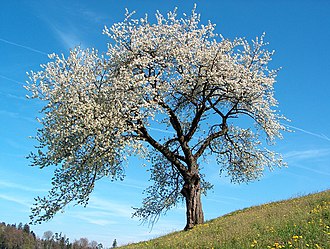
The embryophytes are plants of the clade Embryophyta, also known as Plantae sensu strictissimo or land plants. They are complex multicellular eukaryotes with haplodiplontic life cycles. All have specialized reproductive organs called sporangia, and reproduce sexually via alternation of generation...