Gene silencing protects cassava from bacterial blight and streak virus
Gilbert, K. B.; Lin, Z.-J. D.; Veley, K. M.; Stanton, M. K.; Yoder, M.; Norton, J.; Feng, S.; He, Y.; Hernandez, G. L.; Jensen, G.; Wozniak, E.; Ke, K.; Wages, S. A. M.; Jacobsen, S. E.; Carrington, J. C.; Bart, R. S.
Crispr
Cassava feeds roughly 800 million people across Africa, Asia, and Latin America, and two diseases routinely devastate harvests that smallholder families depend on for food and income.
Cassava plants have genes that certain pathogens essentially hijack to get inside and spread. Researchers used a modified version of CRISPR to attach chemical tags to those genes, telling the plant to keep them turned off so pathogens can't use them. In lab tests, this reduced visible disease symptoms, and the protective tags were partly passed on to the next generation of plants.
Key Findings
Two CRISPR-based methylation tools both reduced expression of MeSWEET10a, a gene required by Xanthomonas bacterial blight, and visibly lessened water-soaking infection symptoms in leaves.
DNA methylation was simultaneously delivered to three susceptibility gene promoters at once, including two targeted at Cassava brown streak virus, demonstrating multiplexed epigenome editing.
CpG methylation showed partial inheritance into the next plant generation, but was unstable without the continued presence of the methyltransferase machinery.
chevron_right Technical Summary
Scientists used gene-editing tools to silence cassava genes that disease-causing bacteria and viruses exploit to infect the plant. By chemically tagging those genes to stay switched off, they reduced infection symptoms without altering the plant's DNA sequence.
Abstract Preview
Original paper
Multiple approaches for CRISPR-based targeting of DNA methylation to promoters of bacterial and viral susceptibility genes in cassava
Targeted epigenetic modifications of specific gene regulatory regions have the potential to confer beneficial traits for crop improvement. Two recently developed CRISPR/Cas9-based epigenome editing...
open_in_new Read full abstractAbstract copyright held by the original publisher.
Species Mentioned
Was this useful?
Want to tell us more? (optional)
Thanks for the note!
Something went wrong — please try again.
Too many submissions. Try again in an hour.
Targeted knockout of a host peroxisomal peptidase confers field resistance to...
The corn in your grocery store and the staple food keeping millions of East African families fed is under serious threat from a viral disease that can wipe o...
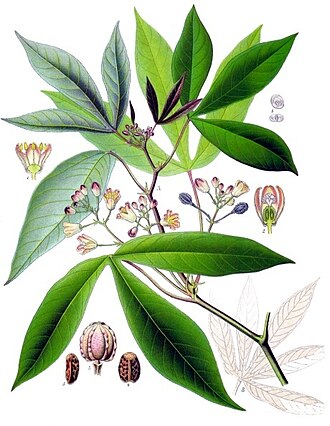
Manihot esculenta, commonly called cassava, manioc, or yuca, is a woody shrub of the spurge family, Euphorbiaceae, native to South America, from Brazil, Paraguay and parts of the Andes. Although a perennial plant, cassava is extensively cultivated in tropical and subtropical regions as an annual ...