Evolution of root systems in land plants.
Lakehal A, Farrar E, Pandey BK, Sturrock CJ, Beeckman T
Climate Adaptation
Every carrot you pull, every tree that survives a dry summer, and every lawn that bounces back after compaction owes its resilience to root adaptations that took millions of years to evolve — and scientists are now racing to breed those same traits into crops before the climate shifts out from under them.
The first plants to move onto land had no roots at all — they partnered with fungi and grew tiny hair-like threads to grab water and stay put. Over time, plants evolved increasingly sophisticated root systems that can sense what's in the soil and change their growth accordingly. Today, researchers are studying these ancient evolutionary tricks to help food crops stay productive as soils degrade and weather becomes more extreme.
Key Findings
The earliest land plants lacked true roots entirely, relying on fungal partnerships and rhizoids for water, nutrients, and anchorage.
Root complexity evolved progressively from simple forking roots in ancient lycophytes (clubmosses) to the highly branched, hormonally regulated systems seen in flowering plants today.
Root plasticity — the ability to change root shape and behavior in response to soil conditions — is identified as a critical trait for maintaining crop yield stability in a warming climate.
chevron_right Technical Summary
This review traces how plant root systems evolved over hundreds of millions of years, from simple structures in ancient mossy ancestors to the complex, adaptive roots of modern flowering plants. Understanding this evolutionary history reveals how roots help crops survive drought, poor soils, and climate shifts.
Abstract Preview
Land plants have successfully colonized every terrestrial environment on Earth, and the evolution of root systems has played a vital role in this success. Root systems perform critical functions ra...
open_in_new Read full abstractAbstract copyright held by the original publisher.
Species Mentioned

Was this useful?
Want to tell us more? (optional)
Thanks for the note!
Something went wrong — please try again.
Too many submissions. Try again in an hour.
Gene editing removes 97% of celiac-triggering proteins from bread wheat
It could mean that people with celiac disease — roughly 1 in 100 worldwide — may one day safely eat bread made from real wheat, without sacrificing the taste...
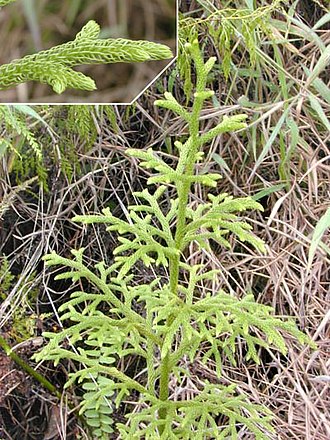
Lycopodiopsida is a class of vascular plants also known as lycopsids, lycopods, or lycophytes. Members of the class are also called clubmosses, firmosses, spikemosses and quillworts. They have dichotomously branching stems bearing simple leaves called microphylls and reproduce by means of spores ...