Distinct filtering processes shape bacterial and fungal communities and their co-occurrence patterns across garlic-associated compartments.
Wang T, Niu B, Xia S, Song D, Yang Y
Soil Health
If you grow garlic in the same bed year after year and keep losing bulbs to rot, the answer may already be living in your soil—specific root bacteria that actively fight off the fungi responsible, and this study names the candidates worth nurturing.
Scientists studied the microscopic communities of bacteria and fungi that live on and inside garlic plants—in the soil around the roots, inside the roots themselves, and in the leaves. They found that bacteria travel up through the roots into the leaves, while fungi seem to jump directly from soil to leaves, bypassing the roots entirely. Certain bacteria found in garlic roots appear to be natural enemies of the harmful fungi that cause disease, suggesting these bacteria could be harnessed as biological protectants instead of chemical pesticides.
Key Findings
Microbial community composition was driven more by plant compartment (soil vs. roots vs. leaves) than by geographic growing region across four major garlic-producing areas in China.
Bacterial leaf colonizers traced back primarily to root endosphere, while fungal leaf colonizers appeared to arrive directly from rhizosphere soil—two distinct immigration routes in the same plant.
Network analysis identified Pseudomonas- and Flavobacterium-rich bacterial modules in roots that were negatively correlated with pathogen abundance, and cross-kingdom keystone pathogens (Verticillium, Fusarium) were suppressed by bacterial taxa Lysinimonas and Microbacterium.
chevron_right Technical Summary
Researchers mapped the bacteria and fungi living in garlic's soil, roots, and leaves across four major growing regions in China, finding that certain bacteria—especially Pseudomonas and Flavobacterium in roots—naturally suppress the disease-causing fungi that thrive under long-term garlic monoculture.
Abstract Preview
Garlic (Allium sativum L.) is an important economic crop that is often subjected to continuous monoculture practices. Although the garlic rhizosphere is known to harbor growth‑promoting and disease...
open_in_new Read full abstractAbstract copyright held by the original publisher.
Species Mentioned
Was this useful?
Want to tell us more? (optional)
Thanks for the note!
Something went wrong — please try again.
Too many submissions. Try again in an hour.
Targeted knockout of a host peroxisomal peptidase confers field resistance to...
The corn in your grocery store and the staple food keeping millions of East African families fed is under serious threat from a viral disease that can wipe o...
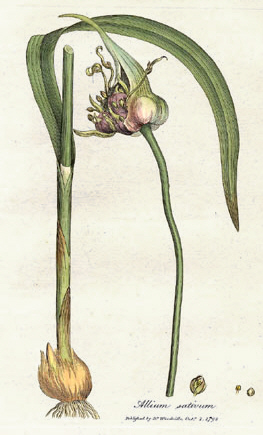
Garlic is a species of bulbous flowering plants in the genus Allium. Its close relatives include the onion, shallot, leek, chives, Welsh onion, and Chinese onion. Garlic is native to central and western Asia, stretching from the Black Sea through the southern Caucasus, northeastern Iran, and the ...