Image-based machine learning models for customized soil moisture management.
Kim Y, Kim T, Lee S, Lee S, Suh K
Soil Health
Smarter, plant-by-plant watering could mean fresher produce at the grocery store, less water wasted in the fields that grow your food, and healthier crops overall.
Scientists trained a computer to look at regular photos of soil and figure out how moist it is — even several inches underground. They tested this on ginseng plants and found the AI was surprisingly accurate. The goal is to one day let farmers water each individual plant based on what it actually needs, instead of just guessing or treating the whole field the same.
Key Findings
A deep learning model (DenseNet121) predicted surface soil moisture from RGB images with 97.3% accuracy (R² = 0.973, RMSE = 4.14).
A random forest model predicted moisture at deeper soil layers (up to 15 cm) with 90.6% accuracy (R² = 0.906, RMSE = 4.97), capturing complex nonlinear patterns.
The system demonstrates that non-invasive, image-based soil monitoring can enable customized, plant-level irrigation management in smart farming.
chevron_right Technical Summary
Researchers built an AI system that uses photos of soil surfaces to predict how wet the soil is at different depths — without poking sensors into the ground near each plant. This could help farmers water each plant based on its actual needs, rather than treating an entire field the same way.
Abstract Preview
Crop growth can vary even under the same cultivation conditions, highlighting the limitations of conventional smart farming systems that apply uniform treatments to all crops. These average-based a...
open_in_new Read full abstractAbstract copyright held by the original publisher.
Species Mentioned
Was this useful?
Want to tell us more? (optional)
Thanks for the note!
Something went wrong — please try again.
Too many submissions. Try again in an hour.
Targeted knockout of a host peroxisomal peptidase confers field resistance to...
The corn in your grocery store and the staple food keeping millions of East African families fed is under serious threat from a viral disease that can wipe o...
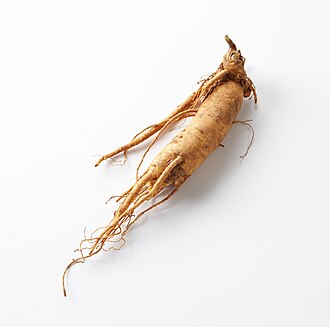
Ginseng is the root of plants in the genus Panax, such as South China ginseng (P. notoginseng), Korean ginseng (P. ginseng), and American ginseng (P. quinquefolius), characterized by the presence of ginsenosides and gintonin.